
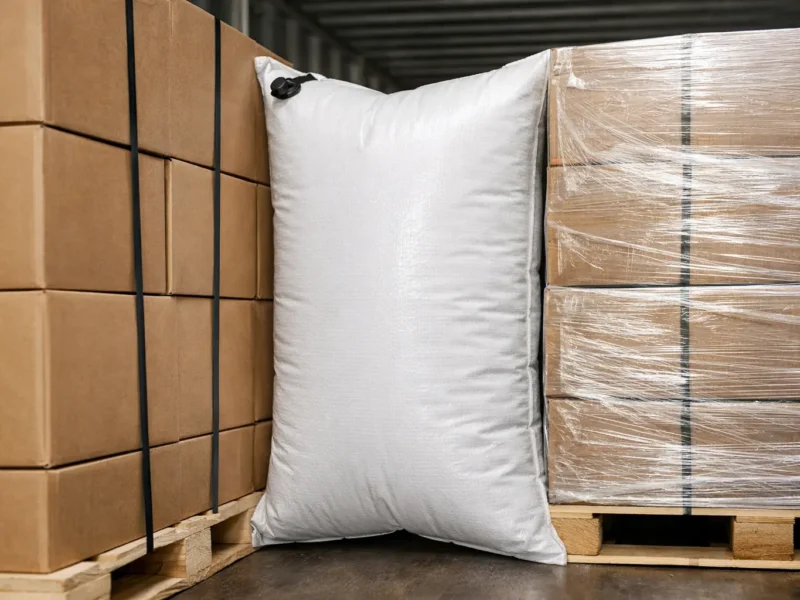
A shifted load rarely starts as a major problem. It starts with a few inches of open space, a lane change, a hard brake, or rail impact that pushes product where it should not go. That is where pp woven dunnage bags earn their place. For shippers moving palletized or industrial freight, they are a practical way to fill voids, control movement, and reduce the risk of cargo damage claims.
Used correctly, these bags do more than occupy space between loads. They create lateral support that helps freight stay in position through normal transport forces. For warehouse teams and transportation managers, that means fewer damaged units, less rework at destination, and a more consistent securement process across truck, rail, and intermodal shipments.
What pp woven dunnage bags are built to do
PP woven dunnage bags are inflatable void fillers made with an outer layer of woven polypropylene fabric and an inner air-holding liner. Once placed in the void between cargo units and inflated to the proper pressure, they press against adjacent surfaces and help prevent load shift during transit.
The woven polypropylene construction matters. It gives the bag strength, puncture resistance, and durability that fit demanding freight environments. In practical terms, that means the bag can perform well in applications where loads are heavy, surfaces are uneven, or handling conditions are less forgiving.
This does not mean every shipment needs a woven bag. It means woven construction is often the right choice when the job calls for higher performance and more reliable resistance to transport stress.
Why pp woven dunnage bags are common in industrial shipping
In freight securement, product choice usually comes down to performance under pressure, consistency, and cost control. PP woven dunnage bags check those boxes for many shippers because they work across a wide range of industries and transport modes.
For truck shipments, they help stabilize pallet loads that might otherwise lean or walk during braking and cornering. In rail applications, they are used to manage the more aggressive forces that develop during coupling, vibration, and long-distance movement. In intermodal use, where freight may be transferred across multiple handling points, the ability to maintain void fill through changing conditions becomes even more valuable.
Another reason these bags are widely used is operational simplicity. Teams can be trained quickly, inflation is fast with the right tools, and the method is easier to standardize than many improvised void-fill approaches. That matters in busy shipping environments where securement needs to be repeatable, not dependent on whoever happens to be loading that day.
Where bag performance depends on the application
No dunnage bag should be treated as a one-size-fits-all answer. Performance depends on the weight of the load, the size of the void, the shape and surface of the cargo, and the mode of transport. A bag that works well in a dry van with stable pallet geometry may not be the right answer for a railcar carrying heavier product with irregular contact points.
This is where buyers sometimes get into trouble. They assume the strongest bag is always the best option, or they focus only on unit cost. In reality, over-specifying can add unnecessary cost, while under-specifying can lead to failure in transit. The right selection is the one that matches the application closely enough to provide dependable support without creating waste in the process.
Bag size also matters more than many teams expect. If the bag is too small for the void, it may over-expand and lose effective contact area. If it is too large, placement becomes awkward and inflation can be inconsistent. Good securement starts with realistic measurements, not rough guesses.
PP woven dunnage bags vs other common materials
The most useful comparison is usually between PP woven bags and kraft paper dunnage bags. Both are widely used, and both can perform well when properly matched to the load.
PP woven dunnage bags generally offer stronger puncture resistance and better durability in rougher applications. That makes them a practical fit for heavier loads, repeated handling environments, and shipping conditions where bag integrity is under more stress. They are often favored when buyers want a more rugged outer construction and dependable performance across demanding freight lanes.
Kraft bags can be a solid option for lighter-duty applications or operations that prefer paper-based outer materials. Depending on the shipment profile, they may offer a cost-effective solution. But they are not always the better choice when the load environment is harsher or when contact surfaces increase wear risk.
The trade-off is straightforward. Woven polypropylene bags are typically selected for strength and durability. Kraft bags may fit where load conditions are less severe and pricing is the main driver. The correct decision depends on the shipment, not on a blanket preference for one material.
How to choose the right pp woven dunnage bags
Start with the void size. Accurate width, height, and depth measurements give you the first filter for bag dimensions. Then evaluate load weight and how much movement the adjacent cargo can tolerate. Heavier, less forgiving loads usually require more deliberate bag selection and inflation control.
Next, look at transport mode. Truck, rail, and intermodal do not produce the same forces. Rail applications in particular can place higher demands on the bag and the overall securement method. If your freight moves through more than one mode, choose for the most demanding part of the journey, not the easiest one.
Cargo surface and packaging style should also be part of the decision. Smooth, stable pallet faces create a better contact area than uneven or damaged surfaces. If the load has sharp edges, protrusions, or unstable stacking patterns, the bag may need additional protection or a different specification.
Valve type and inflation method matter as well. Fast-fill systems can improve loading speed, but only if they are compatible with the bag design and your operation. A good bag paired with the wrong inflator setup can slow down the line or create inconsistent fill pressure.
For many buyers, the smartest move is to standardize around a few bag options that cover the majority of shipment profiles, then keep room for application-specific adjustments where needed. That approach improves purchasing efficiency without forcing every load into the same securement method.
Common mistakes that reduce results
One common mistake is using the bag as a substitute for proper loading practice. Dunnage bags are meant to support cargo securement, not fix poor pallet condition, weak unitization, or oversized voids that should have been addressed earlier in the loading plan.
Another issue is underinflation or overinflation. A bag needs enough pressure to hold the load firmly, but not so much that it becomes stressed beyond its intended working condition. Teams need clear procedures, proper tools, and consistent training if they want repeatable results.
Bag placement is another detail that affects performance. If the bag sits too low, too high, or against an unstable contact point, it may not distribute force effectively. What looks acceptable at the dock can fail once the trailer or railcar begins moving.
Quality consistency matters too. Industrial buyers need bags that perform the same way from order to order. Manufacturing control, testing discipline, and material standards are not side issues in this category. They are part of whether the product does its job when the shipment is on the road and no one can intervene.
Why quality control matters with pp woven dunnage bags
Dunnage bags are often treated as a low-visibility line item until a load fails. Then every detail matters – material strength, valve reliability, dimensional consistency, and how well the bag holds pressure under transit conditions.
That is why quality control should be part of the buying decision from the start. Bags produced with disciplined testing and tighter manufacturing standards are more likely to deliver predictable field performance. For shippers managing claims exposure, customer service risk, and freight replacement costs, predictable performance is worth more than a marginal savings on paper.
This is also where supplier responsiveness becomes important. If your operation needs guidance on load type, bag size, or inflation equipment, you want answers quickly and recommendations based on actual shipping conditions. Plastix USA works with buyers who need that kind of practical product guidance, especially when the goal is not just buying a bag, but choosing the right one for the lane and load.
When pp woven dunnage bags make the most sense
These bags make the most sense when your freight has meaningful void space, your product value justifies active load protection, and your shipments face enough movement risk that doing nothing is the more expensive option. They are especially useful for industrial and palletized goods moving in truck, railcar, or intermodal channels where lateral load shift creates damage, safety, or claims exposure.
They are not a cure-all, and they are not the answer for every load. But in the right application, they are one of the most efficient tools available for improving load stability without adding major complexity to the shipping process.
If your team is trying to reduce freight damage, improve loading consistency, or standardize a better void-fill method, pp woven dunnage bags are worth evaluating with real shipment data, not assumptions made at the dock.