
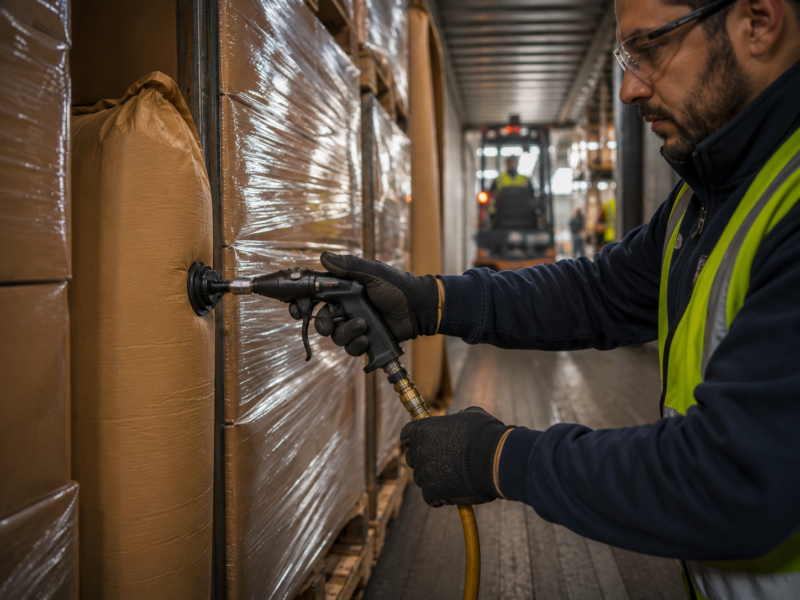
A load can be blocked and braced correctly and still fail if the bag is underinflated, overinflated, or slow to deploy. That is where the dunnage bag inflator tool stops being a small accessory and starts affecting loading speed, bag performance, and cargo protection. For warehouse teams and freight operators, the right tool is not just about filling air bags. It is about getting consistent pressure into the bag, reducing handling time, and avoiding preventable damage claims.
Why the dunnage bag inflator tool matters
In most shipping environments, labor is tight and loading windows are short. Crews need equipment that works the first time, connects quickly to the valve, and delivers repeatable results. If the inflator is awkward, slow, or incompatible with the valve style, the process breaks down fast. Operators may fight the connection, stop inflation too early, or force the bag into position after it has already started filling.
That creates risk. A bag that is not inflated to the intended level may not hold the load firmly through vibration, braking, coupling impacts, or lateral movement. A bag that is overinflated can be damaged during loading or fail under transit pressure. In either case, the bag itself gets blamed, even when the real problem started with the inflation method.
For buyers, this is why tool selection deserves the same attention as bag size, ply construction, and transport mode. Truck, railcar, and intermodal shipments do not all place the same demands on the securement system. The inflator tool has to support the bag and valve combination being used, along with the pace and conditions of the loading operation.
What a dunnage bag inflator tool actually needs to do
At a basic level, the tool connects the air supply to the bag valve and allows controlled inflation. In practice, the job is more specific than that. A good tool should create a secure valve connection, maintain airflow without excessive leakage, and give the operator control over fill speed.
That sounds simple, but details matter. If the tool does not seat properly in the valve, inflation becomes inconsistent. If airflow is too aggressive for the application, crews can overshoot pressure before they reposition the bag correctly. If the trigger or grip is poorly designed, fatigue builds up over repeated loading cycles.
The best setup is usually the one that matches the actual work environment, not the one with the most features. A high-volume operation may prioritize speed and operator efficiency. A shipper handling heavier or more sensitive loads may care more about precise control and valve compatibility. There is no single best tool for every facility.
Matching the tool to the valve and bag type
This is the first checkpoint, and it is where many purchasing mistakes start. Dunnage bags are available with different valve configurations, and the inflator tool must be designed for the valve style in use. If the tool and valve do not match, crews often improvise. Improvisation in cargo securement usually shows up later as a freight claim.
Valve fit affects both inflation speed and seal integrity. A proper connection helps air move efficiently into the bag while limiting leakage during filling. It also reduces the chance of damaging the valve during repeated use. In high-throughput facilities, even a small mismatch becomes expensive because it slows every load and creates avoidable frustration on the floor.
Bag construction matters too. A lightweight application in over-the-road shipping may not require the same inflation behavior as a heavier railcar load. The bag material, size, and pressure requirements all influence what kind of tool makes sense. Buyers should evaluate the bag and inflator as one system rather than separate line items.
Air source, pressure control, and loading conditions
Most dunnage bag inflator tools rely on compressed air, but the quality and consistency of that air supply should not be assumed. In some facilities, pressure fluctuations are common. In others, hose length, fitting wear, or shared air lines can affect performance. If the plant air system is inconsistent, the operator may not get consistent bag inflation either.
That is why pressure control deserves attention. The goal is not to inflate as fast as possible every time. The goal is to inflate correctly for the load, the void, and the mode of transport. A tool that gives better control can help reduce both underfill and overfill, especially when multiple operators are working across shifts.
Loading conditions also change what works best. In a clean, organized dock environment, crews may have more flexibility. In field conditions or busier warehouse lanes, simplicity becomes more valuable. A tool that is durable, easy to handle, and less sensitive to operator technique often performs better over time than one that looks good on paper but struggles under daily use.
Speed matters, but consistency matters more
It is easy to focus on cycle time. Faster inflation can help move more loads through the dock, especially in peak periods. But speed without consistency creates hidden cost. A few seconds saved at the valve means very little if the bag is not positioned correctly or if inflation varies from one operator to the next.
The better question is whether the tool helps the crew produce repeatable securement. Can they connect quickly, fill accurately, and move on without second-guessing the result? That is what protects throughput.
This is especially relevant for operations loading mixed products or variable void sizes. When the job changes from shipment to shipment, crews need an inflator tool that keeps the process stable. Equipment should reduce variability, not add to it.
Durability and maintenance in real warehouse use
An inflator tool is a working piece of equipment. It gets dropped, dragged, handled by multiple shifts, and exposed to dust, vibration, and constant use. If it is not built for that environment, replacement frequency rises and downtime follows.
Durability is not only about body construction. Buyers should also think about trigger reliability, connection points, hose compatibility, and wear at the valve interface. A weak point at any of these areas can shorten service life or reduce inflation accuracy over time.
Maintenance should be straightforward. If a tool is difficult to inspect or service, minor issues can stay unnoticed until a shipping problem occurs. Operations teams usually benefit from equipment that is simple to maintain and easy to standardize across locations. That makes training easier and keeps replacement planning predictable.
What buyers should ask before ordering
The right purchasing conversation is usually more practical than technical. Start with the shipment type, void size range, bag style, valve type, and mode of transport. Then look at how the work is actually done. How many loads are being secured per shift? How experienced are the operators? Is inflation happening in a fixed station or across multiple dock positions?
It also helps to ask where the current process fails. If crews complain about slow loading, the problem may be airflow or ergonomics. If bags are not performing consistently, the issue may be pressure control or valve fit. If replacement rates are high, durability may be the real concern.
A knowledgeable supplier should be able to match the inflator tool to the full application rather than just quote a generic accessory. That is especially important when freight moves in more demanding environments such as rail or intermodal, where load forces can be less forgiving.
Common mistakes with inflator tool selection
One common mistake is treating the tool as interchangeable across every dunnage bag program. That can work in limited cases, but not always. Different valve styles and shipping demands can require a different setup.
Another mistake is buying only on unit price. A lower-cost tool may look attractive until it slows loading, wears out quickly, or leads to inconsistent inflation. In cargo securement, low upfront cost can become higher total cost if product damage, labor inefficiency, or bag waste increases.
The last mistake is ignoring training. Even the right tool performs poorly if operators are not shown the correct inflation method and bag placement sequence. Good equipment and clear process should go together.
The right tool supports the whole securement system
A dunnage bag program works best when the bag, valve, inflator, and loading method are aligned. When they are not, teams tend to blame the most visible component, which is often the bag. In reality, inflation quality is a major part of securement performance.
For that reason, the inflator tool should be selected with the same care as the bag itself. Plastix USA works with shippers that need dependable bag performance, quick response, and practical guidance on matching products to real freight conditions. That approach matters because cargo protection is rarely improved by guesswork.
If you are reviewing your securement process, start where the operator starts – at the valve, with the tool in hand. Small improvements there often carry all the way to fewer claims and a more reliable load.