
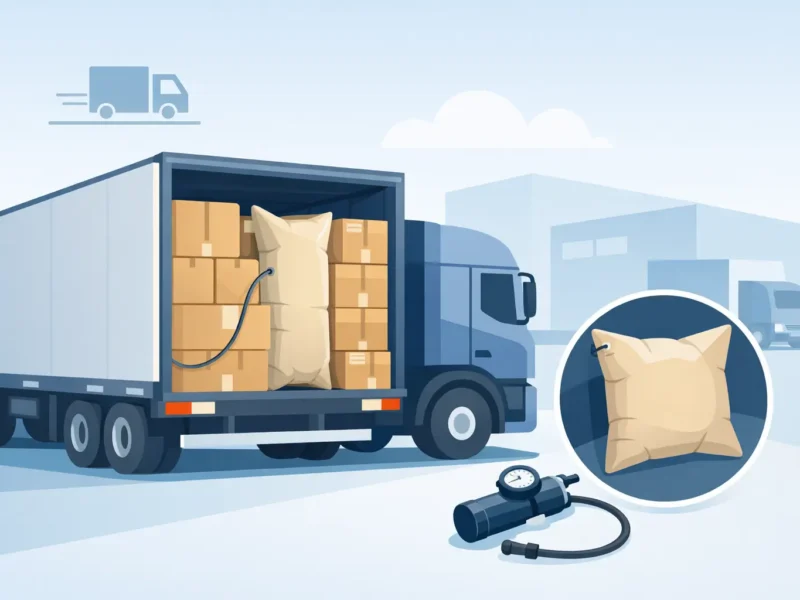
A load can leave the dock looking tight and still arrive with crushed cartons, shifted pallets, or a claim nobody wants to own. That gap between how freight looks at departure and how it behaves on the road is exactly why dunnage air bags for trucks matter. When trailer voids are left unmanaged, vibration, braking, cornering, and uneven road conditions give cargo room to move – and once movement starts, damage usually follows.
For warehouse managers, packaging engineers, and freight teams, the issue is not whether load shift happens. It is how often it happens, how much it costs, and whether the chosen securement method actually matches the shipment. Dunnage air bags are one of the most efficient ways to stabilize freight inside a trailer, but only when the bag type, size, and inflation method fit the application.
What dunnage air bags for trucks actually do
Dunnage air bags are inflatable void fillers placed in gaps between cargo units to limit horizontal movement during transport. In truck shipments, their job is straightforward: absorb pressure, maintain separation where needed, and brace freight so it stays in position from pickup through delivery.
That sounds simple, but the performance depends on more than putting air into a bag. The bag has to contact the load correctly, expand into the void without overfilling, and hold pressure through the trip. If the void is too large for the selected bag, if the load surfaces are unstable, or if the bag is underinflated, the result may be little improvement at all.
This is why experienced shippers treat dunnage as part of cargo securement planning, not as an afterthought added at the trailer door.
Why truck freight is especially vulnerable to load shift
Truck transport creates a different pattern of stress than static storage. A pallet that sits safely in a warehouse can start walking inside a trailer after repeated starts, stops, lane changes, dock impacts, and long stretches of vibration. Even well-wrapped product can lean, settle, or rub if there is enough open space.
The risk tends to increase with mixed loads, lightweight packaging, high-value goods, and stacked freight with inconsistent pallet footprints. Consumer packaged goods, industrial materials, paper products, beverages, and building products can all be affected, but not in the same way. A stable, dense load behaves differently from a tall pallet with flexible outer packaging.
That is where application fit matters. Dunnage air bags are effective, but they are not universal in the sense that one bag style works for every trailer and every load profile.
Choosing the right dunnage air bag for truck shipments
The right selection starts with four variables: void size, load weight, trailer type, and contact surface. Miss one of those, and performance can drop quickly.
Void size and bag dimensions
A bag should be sized to fill the void properly without being forced beyond its working range. If the bag is too small, it may bulge rather than brace. If it is too large for the gap, placement becomes inefficient and inflation control becomes harder. Buyers sometimes focus only on bag length and width, but the practical question is how the inflated bag will sit between the specific load faces inside the trailer.
Load weight and pressure resistance
Heavier freight generally demands stronger bag construction and closer attention to working pressure. A light palletized shipment may perform well with one bag format, while a dense industrial load may require a more durable material structure and stricter inflation discipline. Overbuilding every shipment is not always cost-effective, but under-specifying is where damage claims start.
Bag construction and material type
In truck applications, buyers commonly compare woven polypropylene, kraft-paper exterior bags, and polyethylene-based options. The best choice depends on the shipment environment, reuse expectations, handling conditions, and budget.
PP woven bags are often selected for strength and durability. Kraft options can be a good fit where a paper exterior aligns with handling preferences or application requirements. PE air bags may suit certain use cases where flexibility and material characteristics are priorities. The point is not that one format is always best. It depends on the load, the trailer, and how the operation uses the bags day after day.
Valve quality and inflation tools
A good bag can still fail in practice if inflation is slow, inconsistent, or poorly controlled. Valve design affects fill speed, air retention, and ease of use on the dock. The inflator tool matters too. Fast, repeatable inflation improves throughput and reduces operator error, especially in high-volume shipping environments where teams need consistency across shifts.
Where dunnage air bags work well – and where caution is needed
Dunnage air bags are highly effective for blocking lateral movement between palletized or unitized loads in enclosed trailers. They are especially useful when freight cannot be tightly loaded wall-to-wall or when varying product dimensions leave unavoidable gaps.
They also help operations reduce reliance on improvised fillers that take more time and deliver less predictable performance. Compared with scrap corrugate, loose fill material, or inconsistent hand-built bracing, a properly selected air bag provides more controlled and repeatable void management.
That said, air bags are not a substitute for sound loading practices. They should not be used to make unstable freight stable, and they cannot fix poor pallet quality, weak stacking patterns, or severe overhang. If cargo is already leaning before loading, the bag is being asked to solve the wrong problem.
Surface condition matters as well. Sharp edges, exposed fasteners, or rough contact points can damage the bag during inflation or transit. In some cases, additional protective material or a different securement approach may be necessary.
Common mistakes that reduce performance
Most problems with dunnage air bags for trucks come from selection or use, not from the concept itself. A common mistake is filling an oversized void and expecting the bag to act like a structural brace. Another is underinflating to save time, which leaves room for movement as soon as the trailer starts rolling.
Bag placement is another frequent issue. If the bag sits too low, too high, or against uneven surfaces, contact pressure becomes inconsistent. The load may still shift above or below the point of contact. Training matters here. Teams need to understand where the pressure should be applied and what a correctly inflated bag looks like in a real trailer, not just in a product sheet.
There is also the cost mistake: buying solely on unit price. A cheaper bag that fails more often, slows loading, or leads to cargo claims is not cheaper in operation. Freight protection products should be judged by total effect on damage reduction, labor efficiency, and shipment consistency.
Operational benefits beyond damage prevention
The most obvious benefit is fewer damaged loads, but that is only part of the value. When dunnage systems are chosen well, loading becomes faster and more standardized. That reduces variability between crews and helps facilities maintain consistent securement practices across different lanes and product lines.
There is also a claims-management benefit. Fewer shifts mean fewer rejected deliveries, fewer customer disputes, and less time spent documenting preventable transit damage. For procurement and operations leaders, that translates into lower hidden costs.
Standardized dunnage programs can also support inventory planning. When the same bags, valves, and tools are used across recurring shipment types, purchasing becomes more predictable and training becomes easier. This is one reason many shippers prefer working with a supplier that can provide both product and application guidance rather than simply shipping cartons of bags.
What buyers should ask before placing an order
Before purchasing, it helps to define the shipment conditions clearly. What is the average void size? How heavy is the load? Are you shipping uniform pallets or mixed freight? Is the trailer standard dry van service, or are there intermodal legs that add more handling stress? What inflation equipment is already in use, and is it compatible with the selected valve system?
A supplier should be able to answer those questions with practical recommendations, not vague assurances. That includes explaining trade-offs between bag types, expected use conditions, and the level of performance appropriate for truck freight versus rail or intermodal applications.
For buyers who need consistent securement across multiple SKUs and shipping patterns, sample evaluation and application review are often worth the time. A short test period can reveal whether the selected bag fits the actual dock environment, inflation workflow, and trailer-loading style.
Plastix USA works with shippers that need that kind of application-specific support because the right bag on paper is only useful if it performs on the road and fits the operation on the floor.
A practical standard for better truck load stability
If your operation ships enough volume to see regular movement-related damage, dunnage air bags should be treated as a standard packaging component, not an occasional fix. The real decision is not whether air-filled void protection works. It is whether the system in use was selected with enough attention to load weight, gap size, material type, and dock execution.
The best truck securement programs are usually not the most complicated. They are the ones that make good loading practices repeatable, give teams the right tools, and remove guesswork from freight protection. That is how damage rates come down and shipment confidence goes up.