
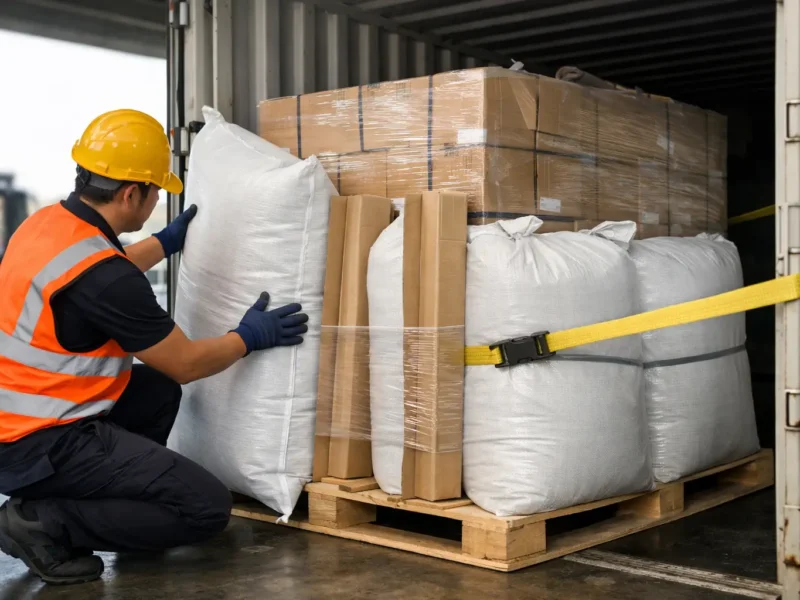
A load can leave the dock looking tight and still arrive with crushed cartons, shifted pallets, or broken product. That gap between departure and delivery is where cargo damage prevention methods either do their job or fail under pressure. For shippers moving freight by truck, rail, or intermodal, damage prevention is not a paperwork exercise. It is a packaging, securement, and execution problem that has to be solved before the trailer doors close.
Thank you for reading this post, don't forget to subscribe!Why cargo gets damaged in transit
Most freight damage is not caused by one dramatic event. It usually comes from repeated movement – braking, cornering, vibration, track impact, road shock, and load settling over time. Even a small void between units can turn into a bigger problem after a few hundred miles. Once product starts moving, the force multiplies, and packaging that looked adequate in the warehouse can fail quickly in transit.
Mode matters. Over-the-road shipments deal with frequent starts, stops, and lane changes. Rail adds higher impact forces, especially during switching and coupling. Intermodal can combine both, which means a load may face multiple handling points and changing force patterns before it reaches the customer. The right prevention method depends on those conditions, not just the product itself.
Effective cargo damage prevention methods start with load assessment
The first step is not choosing a product. It is understanding the load. Weight, packaging type, pallet condition, void size, stacking pattern, and mode of transport all affect what securement method will actually hold.
A lightweight pallet of boxed consumer goods has very different needs than heavy metal parts in a railcar. A load with uniform pallet heights is easier to stabilize than mixed-height freight with weak edges. If stretch wrap is loose, corner boards are missing, or pallets are broken, no amount of added void fill will fully correct the problem.
This is where many damage claims start. Shippers often apply a standard method across every load because it is familiar or fast. In practice, that can mean under-securing heavy freight or overspending on light loads that do not need an aggressive solution. Good prevention is specific. It matches the securement method to the actual shipping condition.
Unitizing the load before it moves
Before freight is secured inside a trailer or container, each pallet or shipping unit needs to be stable on its own. If the unit load is weak, internal movement will start before external securement has a chance to help.
That usually means checking wrap tension, top-to-bottom containment, corner support, and pallet quality. Cartons should be stacked in a pattern that distributes weight evenly and limits overhang. Slip sheets, tier sheets, and edge protection can help maintain shape where carton compression is a concern. Heavier product belongs on the bottom, but that rule is not enough by itself. The full stack has to resist sway and compression during repeated motion.
There is a trade-off here. More wrap, more boards, and more labor can improve containment, but they also raise packaging cost and dock time. The goal is not maximum packaging. It is enough unit stability to handle transit stress without creating unnecessary material use.
Blocking voids is one of the most reliable cargo damage prevention methods
Void space is where many loads fail. When pallets, crates, or rolls have room to move, they will move. That movement creates impact, rubbing, leaning, and eventual collapse. One of the most reliable cargo damage prevention methods is to eliminate that space with the correct dunnage system.
Dunnage air bags are widely used for this reason. When properly selected and inflated, they fill lateral voids between cargo and apply consistent pressure that helps keep the load stable. They are especially useful in truck, rail, and intermodal shipments where side-to-side movement is a common source of damage. They can also improve loading efficiency compared with building custom wood blocking for every shipment.
But the bag has to fit the application. Bag size, construction, burst strength, valve quality, and inflation level all matter. A bag that is too small for the void will not create enough pressure. A bag that is overinflated or used against unsuitable surfaces can fail. The mode matters too. A configuration that performs well in truckload may not be sufficient for rail impact conditions.
Paper, woven polypropylene, and polyethylene air bag formats each have use cases. The right choice depends on load weight, surface characteristics, void dimensions, and transport mode. Buyers who treat all dunnage bags as interchangeable usually find out the difference through damage claims.
Securement methods need to work together
No single product prevents all freight damage. Good load protection usually comes from combining methods so each one handles a specific risk.
Stretch wrap controls the unit load. Corner boards protect edges and improve stack strength. Friction mats can help reduce sliding on the floor. Strapping may be useful for certain heavy or irregular products. Dunnage air bags manage voids and help resist lateral movement. In some cases, blocking and bracing are still necessary, especially with very heavy freight or unusual geometry.
The key is compatibility. For example, an air bag can stabilize a gap between pallets, but it cannot compensate for cartons that are already crushing under top load. Strapping may hold a machine to a skid, but if the skid itself is weak, the whole assembly can still shift. Prevention works best when each layer of protection addresses a known failure point.
Loading technique matters as much as materials
A well-designed securement plan can still fail on the dock. Pallet spacing, alignment, and inflation practice all affect performance. If voids are inconsistent, bags may not seat correctly. If cargo is loaded against damaged walls or uneven surfaces, pressure distribution changes. If inflation tools are inaccurate or operators are rushing, bags can end up underfilled or overstressed.
Training matters here. Warehouse teams need to know where a dunnage bag should sit, how much clearance is acceptable, and when a void is too large for the selected product. They also need to understand that securement is not a final step to check off at the end. It is part of the loading process from the first pallet in.
This is one reason many operations benefit from standardized work instructions for repeat loads. When the product mix and trailer pattern are consistent, a documented loading method reduces variation and improves results. For mixed or changing loads, supervisor review becomes more important because assumptions break down quickly.
Choosing methods by transport mode
Truck, rail, and intermodal shipments should not be secured the same way by default. The force profile changes, and your prevention methods should change with it.
For truckload freight, the main concern is often vibration and repeated directional change. Unitized pallets with well-managed voids can perform well if the load is tight and properly braced. In rail, impact resistance becomes more critical. Heavier-duty dunnage solutions and more deliberate load planning may be needed, especially for long-distance or high-force environments. Intermodal sits in the middle and can be less forgiving because freight sees multiple transitions between handling systems.
If a shipper is seeing damage only on one lane or one mode, that is usually a clue. The issue may not be the product. It may be that the securement method is being carried over from a different transport condition where it was adequate.
Cost control is part of damage prevention
The cheapest securement method is not the one with the lowest unit price. It is the method that reduces claims, protects saleable inventory, avoids rework, and keeps loading efficient. A lower-cost bag or minimal packaging approach can look attractive until a single damaged shipment wipes out the savings.
That said, overspecifying is also expensive. Some operations use heavy-duty solutions across every shipment because they want a margin of safety. In certain lanes, that makes sense. In others, it adds cost without improving outcomes. The better approach is to align product grade and securement design with actual risk.
This is where supplier guidance can be useful. A manufacturer with experience in dunnage applications can help match bag type, size, and inflation equipment to the load instead of forcing a one-size-fits-all answer. For buyers managing multiple SKUs and shipping conditions, that kind of selection support can prevent both underbuying and overbuying.
Make damage prevention measurable
If damage prevention is only discussed after a claim, improvement will be slow. The stronger approach is to track recurring failure points before they become routine costs. Look at damage by lane, customer, carrier, product type, and load pattern. Review photos from origin and destination when possible. Compare securement methods across similar shipments and identify where performance changes.
Even simple observations can reveal patterns. A consistent lean on the last two pallets, repeated carton crush near the sidewall, or bag failure in the same void range all point to a design issue that can be corrected. The point is to move damage prevention out of guesswork and into process control.
Reliable cargo protection comes from getting the basics right every time – stable unit loads, correct void management, mode-specific securement, and disciplined loading practices. When those pieces are aligned, damage rates tend to drop for a simple reason: the load has fewer chances to move, and movement is what causes most of the trouble in the first place.
Recent Comments