
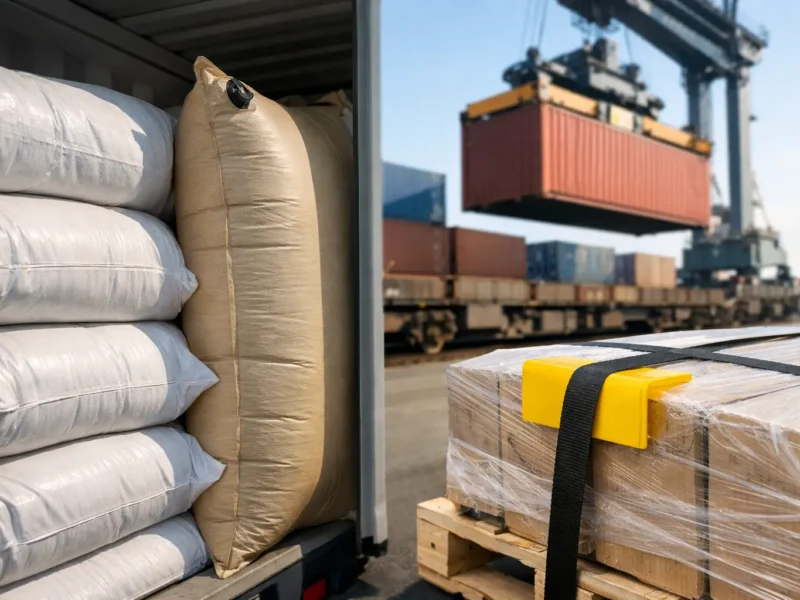
A load that rides without issue on a dry van can fail once it changes hands between truck, terminal, and rail. That is why an intermodal cargo protection guide matters. Intermodal freight sees more handling points, more vibration patterns, longer transit cycles, and more chances for small securement mistakes to become damage claims.
For warehouse managers, packaging engineers, and freight coordinators, the goal is not simply to block visible gaps. It is to build a load that stays stable through acceleration, braking, coupling impacts, cross-country rail movement, and final-mile delivery. That takes a practical approach to void management, compression strength, packaging condition, and the right dunnage system for the mode.
What makes intermodal freight harder to protect
Intermodal shipping combines the risks of multiple transport environments. A trailer or container may move by truck first, then transfer to rail, then return to truck before delivery. Each segment introduces different motion forces. Rail can produce repeated lateral impacts and fore-aft shock. Trucking adds cornering, braking, and road vibration. The load has to tolerate all of it without shifting enough to crush product, damage packaging, or create unsafe unloading conditions.
This is where many protection plans fall short. Teams often design securement around one mode only. A pallet pattern that performs well on over-the-road lanes may not hold up once the same shipment is exposed to rail slack action or longer dwell times in yards. Intermodal protection has to account for the full route, not just the first leg.
Product type also changes the answer. Stable, uniformly palletized cartons behave differently than drums, paper rolls, metal components, bagged goods, or mixed loads. There is no single formula that works for every shipment. The right approach depends on weight, cube, void size, package strength, and how much movement the load can tolerate before product value is affected.
The core principles in an intermodal cargo protection guide
An effective intermodal cargo protection guide starts with restraint, not just cushioning. The job is to keep freight from gaining momentum inside the container or trailer. Once a heavy load starts moving, damage escalates quickly.
The first principle is tight load planning. That means reducing unnecessary voids, distributing weight correctly, and avoiding unstable stack heights. The second is selecting a securement method that matches the load profile. Stretch wrap, corner boards, blocking, bracing, and dunnage air bags all have a place, but they do not solve the same problem. The third is consistency on the dock. A good plan that is applied differently by each shift will not produce reliable outcomes.
Dunnage air bags are often one of the most efficient tools for intermodal void filling because they apply outward pressure between load surfaces, helping prevent lateral and longitudinal movement. But they are not interchangeable commodities. Bag construction, level rating, valve quality, inflation control, and fit all matter. Choosing by price alone usually costs more once product damage, labor delays, and claims are factored in.
Why void size and load strength matter
Two measurements drive many securement decisions – the size of the void and the strength of the load against which the air bag will press. If the gap is too large for the selected bag, the bag may overextend or fail to stabilize the freight. If the product packaging is weak, too much inflation pressure can deform cartons or compromise the unit load.
This is where experienced product selection matters. A heavier shipment does not always mean the highest pressure bag is the right answer. Sometimes the limiting factor is the packaging surface, not the cargo weight. In other cases, a stronger bag and different placement are necessary because the mode introduces harsher shock and vibration.
Rail exposure changes the standard
When freight enters an intermodal lane with meaningful rail exposure, securement requirements become more demanding. Repetitive impacts can work against loose palletization, weak corrugate, and poorly sized void fillers. What looks stable at loading can open up after hours or days of movement.
That is why many shippers use higher-performance dunnage solutions in intermodal service than they would in truck-only operations. Material quality, burst performance, and manufacturing consistency are not secondary details. They affect whether the bag maintains pressure and positioning throughout the trip.
How to choose the right protection method
Start with the load, not the product catalog. Review the shipment weight, package format, pallet condition, stacking pattern, and the actual empty space inside the trailer or container. Then look at the route. Is this a short regional intermodal move or a long-haul lane with significant rail handling? Are there multiple transfer points? Is the freight likely to sit in a yard before the next movement?
If the load is dense and stable with defined sidewall contact, air bags may be ideal for filling center or side voids and limiting movement. If the load is irregular or has sharp edges, additional protection may be needed so the bag is not damaged during transit. If pallet quality is inconsistent, the issue may need to be addressed before adding any dunnage at all. Securement works best when the unit load itself is sound.
Inflation method matters too. Underinflation reduces contact and holding force. Overinflation can damage packaging or stress the bag unnecessarily. Using the proper inflator tool and training the dock team on target fill conditions is part of cargo protection, not a separate issue.
Common failures that lead to preventable claims
Most intermodal damage is not caused by a complete absence of protection. It comes from partial protection that was mismatched to the load. A few patterns show up repeatedly.
One is using an air bag that is too small for the void, which allows the load to build momentum before contact occurs. Another is placing air bags against weak or uneven surfaces that cannot hold pressure evenly. A third is treating all bags as equal, even though material construction and production quality vary widely.
There are also process failures. Bags get installed too low, too high, or in a position where they cannot distribute force effectively. Teams skip inspection of damaged pallets and compromised cartons. Procurement substitutes a lower-grade product without reviewing whether it fits the lane conditions. None of these decisions look major on the dock. They look major when a customer rejects freight.
Building a repeatable intermodal cargo protection process
The most cost-effective system is the one your operation can repeat correctly every day. That usually means standardizing by lane and load type rather than asking crews to make case-by-case judgments under time pressure.
Document which shipments require air bags, what bag size and level should be used, where the bags should be placed, and what inflation equipment is approved. Pair that with receiving feedback from claims data, carrier reports, and warehouse observations. If one lane produces recurring shift damage, treat that as a securement engineering problem, not random bad luck.
It also helps to work with a supplier that can provide more than a box of bags. Technical guidance, samples, and realistic recommendations based on void size, product weight, and transport mode can reduce trial-and-error costs. For many shippers, that is where a manufacturer-focused partner like Plastix USA brings value – not by overselling, but by helping match the dunnage format to the actual shipping condition.
Cost control without cutting protection
Every shipping team is under pressure to manage packaging cost. That is reasonable. But intermodal cargo protection should be evaluated against total landed risk, not unit price alone. A cheaper bag that fails in service is not cheaper. It increases the chance of damaged inventory, labor for rework, delayed deliveries, customer disputes, and claims administration.
The better question is where performance truly matters. Some lanes may be well served by a standard bag format. Others justify a stronger construction because the risk profile is higher. The answer depends on the shipment and the route. Cost control comes from correct specification, not across-the-board downgrades.
It also comes from reducing waste. When the bag size matches the void and the inflator setup is correct, crews work faster and use fewer materials. Good cargo protection is not just about damage reduction. It supports throughput and consistency on the dock.
What good intermodal protection looks like in practice
A good result is usually uneventful. The load arrives with no visible shift, no crushed packaging, and no surprises for the receiver. air bags remain properly positioned. Pallets stay aligned. Unloading is safe and efficient.
That outcome starts before the trailer is sealed. It starts with realistic assumptions about what intermodal freight experiences in transit and with securement choices based on load physics, not habit. If your operation is seeing recurring shift damage, the fix may be as simple as a better bag specification, better placement, or better inflation control.
Freight protection does not have to be complicated, but it does have to be deliberate. When the load, the void, and the dunnage are matched correctly, intermodal shipping becomes a lot more predictable.