
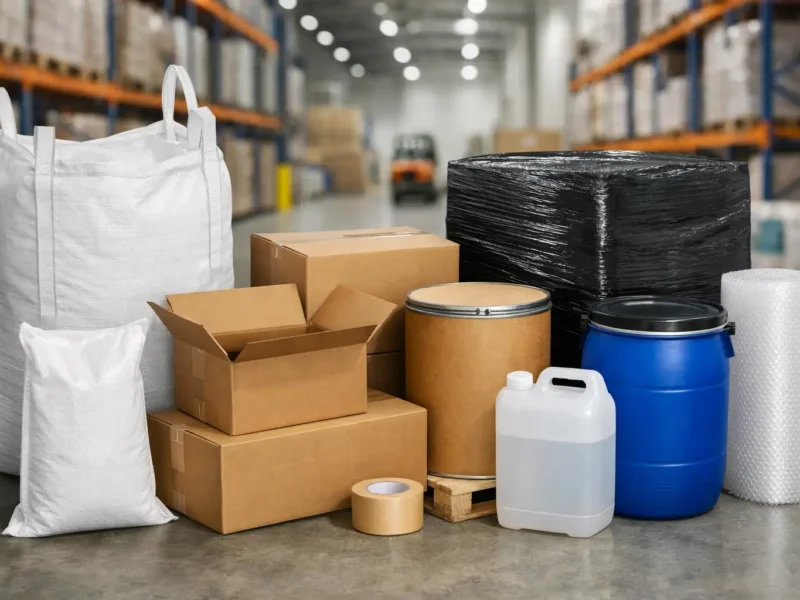
A shifted load does not care what your freight cost on paper. If product moves in transit, the real bill shows up later as claims, rejected deliveries, rework, and frustrated customers. That is why an industrial packaging selection guide needs to start with one practical point: packaging is not just a materials decision. It is a freight-risk decision tied to load stability, transport mode, void size, and handling conditions.
For warehouse managers, packaging engineers, and procurement teams, the wrong specification usually fails in one of two ways. It is either underbuilt and exposes the shipment to damage, or overbuilt and adds avoidable cost, labor, and inefficiency. The right choice sits in the middle. It protects the load consistently, fits the operation, and performs the same way shipment after shipment.
What an industrial packaging selection guide should cover
A useful industrial packaging selection guide should help you answer four questions before you place an order. What are you shipping, how is it moving, where is the open void, and what force will the packaging need to control?
That sounds straightforward, but in practice these factors overlap. A palletized consumer goods load moving dry van over short highway distances presents a different risk than steel coils in rail service or dense industrial components moving through intermodal lanes. The packaging method has to match that reality.
When buyers treat packaging as a commodity, they often focus only on unit price. That can be costly. A lower-priced option that fails under compression, loses air, slows loading, or creates inconsistency across lanes is not less expensive once damage and labor are factored in.
Start with the load, not the catalog
Before choosing any dunnage or cargo-securement product, define the load profile. Weight matters, but so does shape, stacking pattern, surface friction, and how tightly the product is unitized. A stable, stretch-wrapped pallet behaves differently than irregular machinery or paper rolls.
You also need to consider how much movement the load can tolerate. Some products can absorb minor shifting without issue. Others become unsellable if packaging scuffs, cartons crush, or internal components move. The more sensitive the cargo, the less room there is for a generic solution.
Void size is another basic input that gets missed. Dunnage air bags and related securement products are selected around the gap they must fill and the pressure they must maintain. If the bag is too small, it will not properly contact the load. If it is too large for the void or badly positioned, inflation can become inconsistent and performance can drop.
Key load questions to answer early
Know the product weight per unit and per shipment, the dimensions of the void, the mode of transit, and whether the load will face repeated impacts or vibration. Also confirm whether loading conditions are standardized across facilities. A product that ships from multiple sites often needs a packaging approach that is simple enough to repeat correctly under real operating pressure.
Transport mode changes the packaging requirement
Truck, railcar, and intermodal shipments do not expose freight to the same forces. Over-the-road shipments may deal with braking, cornering, and road vibration. Rail introduces higher longitudinal impact and different load dynamics. Intermodal adds more transfer points and handling variability.
That is where many selection mistakes happen. A packaging format that performs well in one lane may not be appropriate in another. Buyers sometimes assume one specification can cover every move, but mixed transport environments often require a closer look at bag construction, pressure retention, and application method.
For example, a lighter-duty option may be suitable for modest void control in certain truck shipments. Heavier loads, wider voids, or more demanding transport conditions may call for stronger materials and more disciplined inflation practices. The right answer depends on the lane and the load, not on habit.
Material choice affects both performance and cost
When selecting industrial packaging for freight securement, material construction matters because it affects strength, puncture resistance, and consistency in use. In dunnage air bags, common formats include PP woven, kraft, and PE-based options. Each has practical advantages depending on the application.
PP woven dunnage bags are often chosen where durability and higher performance are needed. Kraft bags may be preferred in applications where paper exterior characteristics fit the operation or customer preference. PE air bags can be useful in specific void-filling scenarios where flexibility and handling characteristics align with the shipment.
There is no single best material for every use case. The trade-off is usually between cost, strength, handling, and shipment conditions. Heavier-duty materials may reduce failure risk but can raise unit cost. Lower-cost formats may be perfectly acceptable in lighter applications if they are properly matched to the void and transport mode.
The valve and inflator matter more than many buyers expect
A good bag can still underperform if inflation is inconsistent. Valve design, compatibility with inflator tools, and operator technique all affect the result on the dock.
If inflation is too low, the bag may not hold the load firmly enough. If inflation is too high, you can create unnecessary stress on the bag or the load. That is why the selection process should include not only the bag type, but also the valve format and inflation equipment that fit your operation.
In busy shipping environments, speed matters. So does repeatability. A setup that is technically correct but slow or difficult to use often breaks down during peak volume. Packaging should support throughput, not fight it.
How to choose the right dunnage air bag setup
In practical terms, the selection process should narrow from shipment conditions to a specific bag format, size, and inflation method. Start by measuring the void accurately and identifying the surfaces the bag will contact. Then look at the cargo weight and movement forces expected in transit.
From there, match the application to the right construction level. If the shipment is dense, valuable, or exposed to tougher transport conditions, prioritize higher-performing options with proven quality consistency. If the lane is more forgiving, there may be room to optimize cost without compromising load stability.
This is also where testing and supplier guidance become valuable. Product specifications on paper are useful, but they do not replace application knowledge. A supplier with real freight experience can help determine whether your current choice is oversized, undersized, or simply mismatched to the lane.
Common buying mistakes
One common mistake is selecting by price alone. Another is assuming last year’s packaging standard is still correct after a product, pallet pattern, or carrier mix changes. Even small changes in load configuration can affect void management.
A third mistake is ignoring quality consistency. Industrial buyers need packaging that performs the same way from lot to lot. Variability in material or construction can create failures that are hard to trace until claims start climbing.
Some teams also overlook raw material sourcing and production controls. That may seem like a procurement detail, but it directly affects packaging reliability. For buyers shipping high volumes, consistency is not a marketing point. It is an operating requirement.
Why supplier support belongs in the selection process
The best packaging decisions are rarely made from dimensions alone. They come from a combination of product data, shipment details, and application review. That is especially true for companies shipping across multiple modes or dealing with recurring damage in specific lanes.
A knowledgeable supplier should be able to discuss load type, weight, void size, transit method, and inflation equipment without turning the conversation into guesswork. They should also be able to support sampling, quoting, and product selection with enough speed to keep your operation moving.
For companies that need both ecommerce convenience and technical guidance, that balance matters. Plastix USA works in that space by combining standard product availability with consultative support for application-specific recommendations.
A better way to think about packaging cost
The cheapest packaging is not always the lowest-cost packaging. If a stronger or better-matched dunnage solution cuts freight damage, reduces claims, and speeds up loading, it often pays for itself quickly. The opposite is also true. Over-specifying every shipment can quietly add avoidable cost across thousands of loads.
That is why packaging should be evaluated as part of total shipment performance. Look at damage rates, loading time, replacement frequency, and consistency across facilities. The right specification should protect cargo and make the work easier to repeat.
Industrial packaging selection guide for ongoing improvement
An industrial packaging selection guide should not be a one-time document that gets filed away after the first purchase. Freight profiles change. Products change. Carrier networks change. Your packaging standard should be reviewed whenever damage patterns shift or operations expand into new lanes.
If you want fewer surprises in transit, start with the basics and get specific. Match the packaging to the actual load, the actual void, and the actual transport conditions. The closer that fit is, the more likely your packaging will do what it is supposed to do – protect product, control risk, and keep freight moving the way it should.