
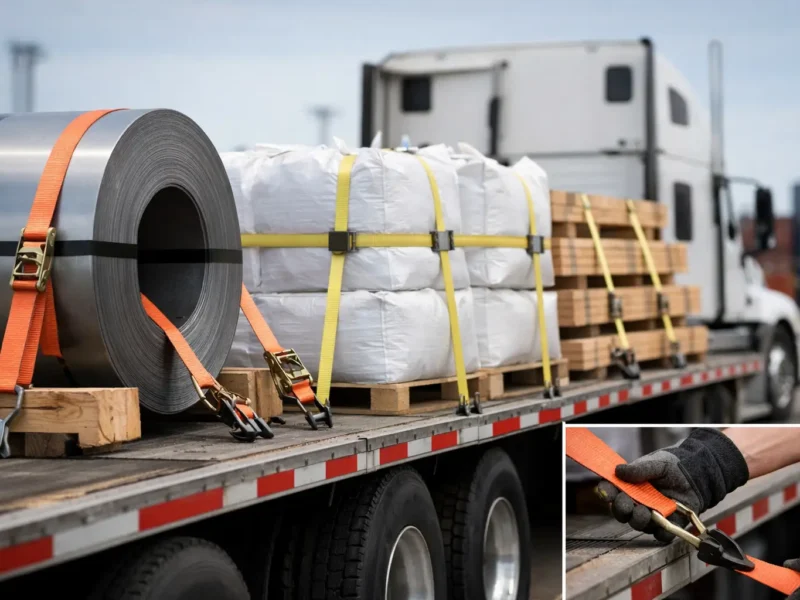
A shifted load rarely starts as a paperwork problem. It starts at the dock, with the wrong restraint method, an unmeasured void, or a securement plan that looked acceptable until the trailer hit a hard brake or the railcar took lateral force. A practical cargo securement compliance guide has to deal with that reality first. Compliance matters, but the real objective is straightforward: keep freight stable, protect people, and avoid damage, claims, delays, and rejected product.
For warehouse managers, packaging engineers, and freight teams, cargo securement compliance is not one rule or one product. It is the combination of equipment selection, loading practice, transport mode, and documented consistency. That is why some loads perform well with basic blocking and bracing, while others require dunnage air bags, restraint systems, or a more engineered approach based on weight distribution and void space.
What cargo securement compliance actually means
In day-to-day operations, compliance means the cargo stays immobilized within the vehicle or container under expected transit forces. That includes forward movement during braking, rearward movement during acceleration, and side-to-side shift during cornering, coupling impacts, or rail movement. It also means the securement method matches the cargo type, the vehicle, and the route conditions.
Many teams treat compliance as a final inspection item. That is usually too late. By the time a loader is looking at a nearly full trailer with inconsistent pallet patterns and uneven gaps, options are limited. Good compliance starts earlier, with packaging design, pallet integrity, load pattern, and a securement method selected for the shipment instead of added as an afterthought.
There is also a practical distinction between being technically compliant on paper and being reliably compliant in the field. A method that works for a short-haul dry van route may not hold up in intermodal or rail service. The standard may allow a certain approach, but actual conditions may demand more restraint, better void fill, or tighter loading discipline.
Cargo securement compliance guide for real shipping conditions
The first question is not which product to buy. It is what the load is likely to do in transit. Heavy, dense product behaves differently than lightweight corrugated cases. A tightly unitized pallet acts differently than irregular industrial parts with uneven centers of gravity. If you do not start with load behavior, securement decisions tend to be reactive and inconsistent.
Truck, rail, and intermodal service also create different securement demands. Over-the-road shipping often involves braking events, lane changes, and vibration. Rail adds higher impact potential, slack action, and repeated lateral forces. Intermodal can combine both profiles, which is why a method that has been acceptable in one lane may underperform when the route or mode changes.
Void management is another common compliance gap. Empty space between loads gives freight room to build momentum before contact. That increases the force on packaging, pallets, and restraints. Dunnage air bags are often used to fill those voids and stabilize loads, but performance depends on selecting the right bag size, construction, and inflation level for the application. An undersized bag, improper placement, or overinflation can reduce performance rather than improve it.
Securement must also account for packaging strength. If the outer packaging cannot withstand the pressure of a restraint method, the system can fail even if the concept is sound. This is why load securement should never be separated from packaging design. The load, the package, and the restraint work as one system.
Common compliance failures that cause damage and claims
One of the most frequent issues is relying on habit instead of shipment-specific evaluation. Teams repeat what worked on a previous load, even when pallet count, product weight, or void size has changed. Small differences can materially change how a shipment behaves.
Another failure point is poor load geometry. Uneven stacking, soft pallets, overhang, and mixed heights create instability before the trailer doors are even closed. No securement product can fully correct a badly built load. If the base load is weak, the securement method is working at a disadvantage from the start.
Incorrect dunnage air bag selection is also common. Bag level, material construction, and valve quality matter. So does whether the bag is intended for truck, rail, or a specific void size. In higher-force environments, using a bag outside its intended rating can create a false sense of protection.
Documentation is often overlooked as well. If your process is not standardized, loader performance varies by shift, location, and experience level. That inconsistency creates compliance risk. A written loading standard with photos, bag placement guidance, inflation instructions, and exception handling is often what separates repeatable performance from avoidable claims.
Building a compliant securement process
A workable process starts with classification. Define the shipment by mode, load type, unit weight, pallet condition, packaging strength, and expected voids. This allows your team to decide whether the load needs blocking, bracing, dunnage air bags, tie-downs, or a combination.
Next, establish a loading pattern that minimizes free movement. Tight loading is usually better than relying on restraint to correct large open spaces. Where voids cannot be avoided, they should be measured rather than estimated. Securement products perform within application ranges, not guesses.
Then match the securement method to the risk. For example, dunnage air bags can be highly effective for filling lateral voids between stable load faces, but they are not a universal fix for every load shape. If the load has sharp edges, unstable surfaces, or weak case walls, other forms of protection or reinforcement may be required.
Training matters here because loading teams make judgment calls in real time. They need clear instructions on placement, inflation, prohibited uses, and signs of a poor application. A compliant process should be simple enough to repeat under production pressure, but specific enough to prevent shortcuts.
Where dunnage air bags fit in a compliance plan
Dunnage air bags are widely used because they address one of the most common causes of in-transit damage: movement in open voids. When properly selected and installed, they help stabilize freight, reduce load shift, and support a more consistent securement process across truck, rail, and intermodal shipments.
That said, they are application-dependent. Bag type should align with transport conditions and load characteristics. PP woven, kraft, and PE options each serve different needs depending on durability requirements, handling preferences, and the severity of the shipping environment. Valve performance and inflation tools also affect installation speed and consistency, which matters for high-volume operations.
The trade-off is straightforward. A lower-cost bag may appear attractive for routine shipping, but if the route, void size, or load weight exceeds what that bag is suited for, the savings disappear quickly in damage costs and claims. The better decision is usually the bag that matches the actual risk profile, not the lowest unit price.
For buyers evaluating securement programs, this is where supplier support becomes important. Product testing, manufacturing consistency, and application guidance all influence whether the securement plan performs the same way load after load. Companies such as Plastix USA focus on that operational side of the decision because bag quality without application guidance is only part of the answer.
How to improve compliance without slowing the dock
The best improvements are usually procedural, not dramatic. Standardize approved load configurations. Create simple visual work instructions. Measure common voids and assign approved bag sizes by lane or SKU group. Review claims data for patterns instead of treating each incident as isolated.
It also helps to separate preventable failures from unavoidable events. If damage repeatedly occurs on similar loads, the issue is usually system design, not random transit conditions. That means the fix is likely in packaging, palletization, or securement selection.
Procurement teams can support compliance by reducing variation in approved materials. Too many substitute products make loader training harder and outcomes less predictable. Consistency in supply, specifications, and quality control often has a direct effect on damage reduction.
A strong cargo securement compliance guide should make one point clear: compliance is not achieved by checking a box after loading. It is achieved by building a load that remains stable when the trip stops being predictable. The closer your securement process gets to that standard, the fewer surprises you will have when the doors open at destination.