
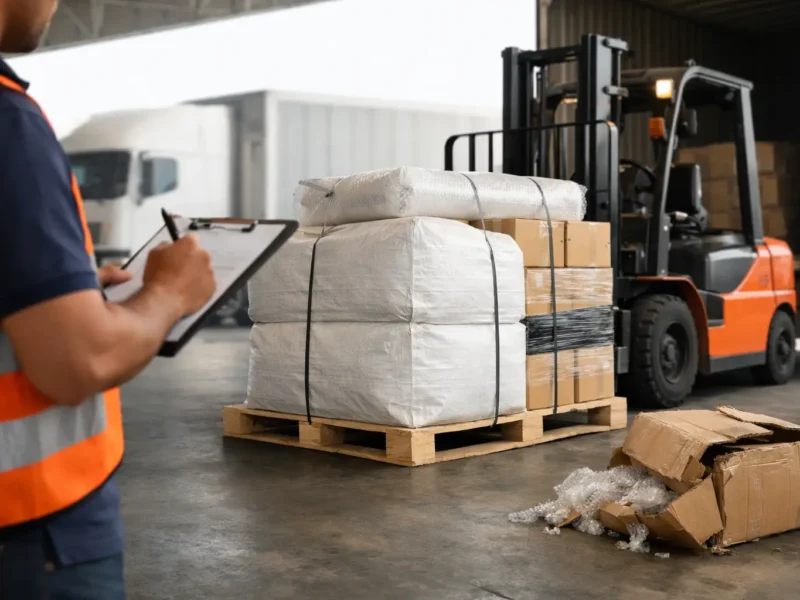
A freight claim usually starts long before delivery. It starts when a load is packed with too much empty space, when unitized product is stacked beyond its real stability limit, or when securement is treated like a final checklist item instead of part of shipment design. If you want to know how to prevent freight claims, the answer is not one fix. It is a series of decisions made before the trailer doors close.
For shippers, warehouse teams, and packaging engineers, claims are rarely just a carrier problem. Damage can come from poor pallet condition, weak containment, underperforming void fill, bad weight distribution, or documentation gaps that make a defensible claim harder to resolve. The most effective approach is to reduce both the chance of damage and the chance of dispute.
How to Prevent Freight Claims at the Load Level
The most reliable claim prevention strategy begins with load design. Freight moves through vibration, braking, cornering, impacts at transfer points, and sometimes rougher handling than anyone planned for. A load that looks stable on the dock can fail quickly once lateral pressure starts building inside a trailer, container, or railcar.
That is why load configuration matters as much as outer packaging. Start with the real shipping environment, not the ideal one. Truckload, LTL, rail, and intermodal each create different movement patterns and force profiles. A stack pattern that performs well in one lane may underperform in another, especially when transit time, transfer frequency, and void size change.
The first question should be simple: where can this load move? Longitudinal movement, side-to-side shifting, toppling, and product-to-product contact all create different damage risks. Once those risks are identified, securement can be matched to the load instead of applied generically.
Match packaging to the actual transit risk
Many claims trace back to packaging that was designed for storage, not transportation. A corrugated carton may handle warehouse stacking but still crush under in-transit compression. Stretch wrap may contain a pallet for staging but provide limited resistance against repeated lateral movement. Corner protection may look sufficient until the load hits a rough transfer or emergency stop.
Preventing claims means testing the package as a shipping system. That includes the carton or outer wrap, pallet quality, unitization method, and void management inside the conveyance. If one part of the system fails, the rest usually follows.
Eliminate empty space before it becomes load shift
Void space is one of the most common and avoidable causes of freight damage. Empty space allows freight to build momentum. Once product starts moving, the forces increase fast, and even strong packaging can fail under repeated impact.
This is where dunnage air bags can make a measurable difference when they are properly selected and correctly installed. They are not a generic filler. Bag size, bag type, valve configuration, inflation level, and surface conditions all affect performance. A bag that is too small for the void, overinflated for the application, or used against unstable load faces can create a false sense of protection.
For truck, railcar, and intermodal shipments, the right dunnage configuration helps stabilize cargo, reduce product-to-product contact, and limit movement through transit. The key is fit and application discipline. Good securement products do their job only when they are matched to the load weight, void dimensions, and mode of transport.
Documentation Prevents Disputes as Much as Damage
Even well-protected freight can end up in a claim dispute if shipment records are weak. Damage prevention and claim prevention are closely related, but they are not identical. Sometimes the issue is not whether damage occurred. It is whether the shipper can show the condition, packaging method, and handoff details clearly enough to establish responsibility.
Bills of lading, packing records, photos, pallet counts, seal records, and loading checklists matter because they establish a baseline. If the load leaves your dock in good condition and that condition is documented, you are in a stronger position if something happens downstream.
Photos are especially useful when they show more than just the wrapped pallet. Capture pallet condition, stack pattern, package labels, trailer condition, securement placement, and final load arrangement. Broad shots and close-up shots both help. If there is visible void fill or dunnage placement, document that too.
Receiving procedures matter too
Many preventable claim headaches happen at the receiving end. If consignee teams sign before inspecting obvious damage, or if exceptions are recorded vaguely, recovery gets harder. A strong shipping process should be matched by a clear receiving process that includes visible inspection, exception notation, and photo capture when freight arrives compromised.
That may sound outside the shipper’s control, and sometimes it is. But for repeat customers, internal facilities, or managed distribution networks, aligned receiving standards can reduce claim friction significantly.
The Most Common Causes of Freight Claims
If a business is seeing repeat freight claims, the pattern usually points to a process issue rather than bad luck. In most operations, the biggest causes are inconsistent packaging, unstable pallet builds, poor trailer loading, unfilled voids, and missing documentation.
Carrier handling does matter, but blaming the carrier alone often delays the real fix. If the same product line keeps getting damaged, or the same lane has repeat issues, the better question is what conditions are allowing that damage to happen. Sometimes the answer is a weak carton. Sometimes it is a load that was never properly braced. Sometimes it is an air bag selected without considering void width or load pressure.
The trade-off is cost. Better packaging and securement usually add material cost or labor time. But claims carry costs that rarely show up on a packaging line budget alone. There is replacement freight, customer dissatisfaction, internal administration, disposal of damaged goods, chargebacks, and lost sellable inventory. In many cases, spending more upfront to stabilize freight is the lower total-cost decision.
How to Build a Claim Prevention Process
The strongest operations treat claim prevention as a standard work issue, not a one-time correction. That means defining what a correct load looks like and making it repeatable across shifts, facilities, and shipment types.
Start by segmenting freight. Heavy industrial product, bagged goods, palletized consumer items, and irregular loads do not need the same packaging logic. Build standards by product type and shipping mode. That may include approved pallet specs, maximum stack heights, wrap patterns, corner protection requirements, and void-fill methods.
Then train to those standards. A written SOP helps, but floor-level consistency comes from simple visual guidance and regular checks. If one shift uses dunnage correctly and another treats it as optional, claims will keep showing up intermittently and be harder to trace.
Audit what happens at the dock
Dock audits often reveal the gap between packaging policy and actual execution. Look at trailer condition, floor integrity, load spacing, securement placement, inflation practices, and final photo records. Small deviations matter. A damaged pallet runner, a larger-than-expected void, or an underinflated bag can be enough to change the outcome in transit.
It also helps to review claims by product, lane, carrier, and packaging method. If one mode or customer destination generates disproportionate damage, that points to an application issue worth correcting. Freight claim data is operational feedback if you use it that way.
Choosing Securement That Actually Fits the Shipment
Not every load needs the same level of intervention, and overengineering can waste money. The goal is not to use more material. The goal is to use the right material where movement risk exists.
For void management, the selection of dunnage air bags should reflect the application, not just availability in the warehouse. Load weight, void size, commodity characteristics, and transport mode all matter. Rail and intermodal environments often require a different performance threshold than short-haul truck shipments. Surface friction, load face shape, and whether the product can tolerate pressure also affect the right setup.
This is where supplier support has value. A manufacturer that understands cargo securement can help narrow the right bag construction, dimensions, and inflation tools for the job instead of pushing a one-size-fits-all answer. Companies like Plastix USA work with these variables every day, which matters when a recurring claim problem needs a practical fix fast.
How to Prevent Freight Claims Over Time
If you are serious about how to prevent freight claims, treat each damaged shipment as a process signal. Do not stop at filing paperwork or recovering cost. Ask what moved, why it moved, and what control failed. The answer may be packaging strength, pallet quality, trailer loading, or void fill. Often, it is a combination.
The operations that reduce claims most effectively are not the ones reacting fastest after damage. They are the ones designing loads that can tolerate real transit conditions before damage occurs. That work is not glamorous, but it protects margin, customer relationships, and shipping reliability. A well-secured load does more than arrive intact. It removes one more variable your operation does not need.