
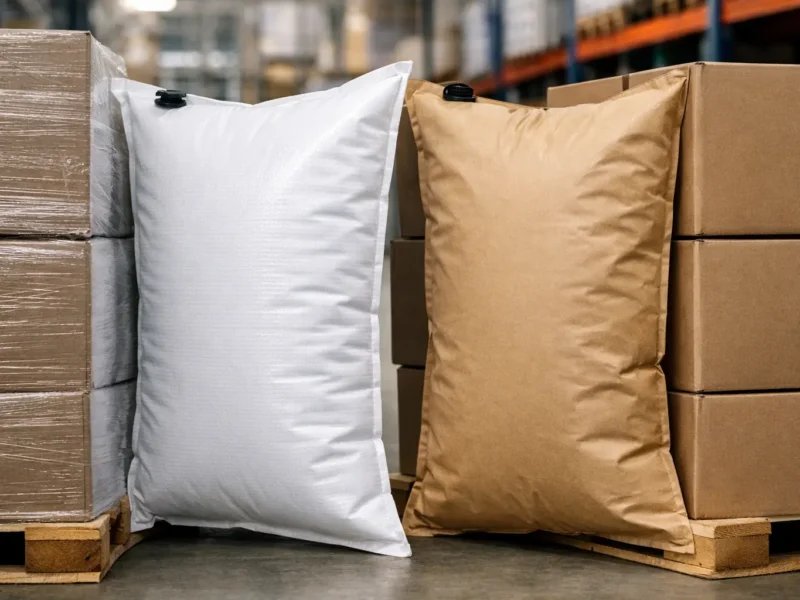
A load that rides fine on a short truck route can fail fast once it hits rail impact, extended transit, or repeated handling. That is where the woven dunnage bags vs paper decision stops being a material preference and becomes a cargo-risk decision. If you are choosing between the two, the right answer depends on how much force the load will see, how much void you need to fill, and how much consistency your operation requires.
For shipping teams, the question is rarely which option is cheaper on a unit basis. The better question is which bag gives the right level of restraint for the application without creating avoidable damage, labor issues, or replacement costs. Woven polypropylene dunnage bags and kraft paper dunnage bags can both serve a purpose, but they do not perform the same way under pressure.
Woven dunnage bags vs paper in real shipping conditions
The biggest difference shows up in how each bag handles stress. Woven dunnage bags are built with a polypropylene outer layer that resists abrasion, puncture, and moisture better than paper-based construction. In truck, railcar, and intermodal environments where loads can shift repeatedly, that added durability matters.
Paper dunnage bags, usually made with multiple layers of kraft paper over an inner bladder, are often used in lighter-duty applications. They can perform well when shipping conditions are controlled, voids are moderate, and the load is less likely to generate high lateral force. Many operations still use them effectively, especially where cost control is a primary factor and load movement is limited.
The trade-off is straightforward. Paper bags may be suitable for some shipments, but woven bags generally offer a wider performance window. When transit conditions become less predictable, woven construction tends to hold up better.
Material strength is only part of the story
On paper, a bag may meet a stated specification. In practice, handling damage, sharp product edges, humidity, trailer conditions, and inflation habits all affect outcome. That is why material selection should be tied to the actual shipping environment, not just the catalog description.
A woven bag typically gives operators more confidence when there is repeated vibration, tighter loading patterns, or a higher chance of bag-to-cargo surface friction. The outer weave helps resist tearing when the bag is pressed hard between uneven surfaces. That can be especially important with pallet loads, industrial products, building materials, or dense packaged goods.
Paper bags can still be a practical option where surfaces are smoother and the load profile is more forgiving. If your shipment moves by truck over shorter distances with well-contained pallet patterns and limited void variation, a paper bag may do the job. The key is not assuming that acceptable performance in one lane translates to every lane.
Moisture and handling can change the outcome
Freight environments are not clean lab conditions. Trailers sweat. Railcars see temperature swings. Cross-docks expose loads to weather and rough handling. In those situations, the woven dunnage bags vs paper comparison becomes more about durability over time.
Woven bags generally handle exposure better. The polypropylene outer layer is less vulnerable to weakening from damp conditions, and it tends to maintain its structure during loading and unloading. If bags are dragged, pressed against rough wood, or exposed to grime and moisture, woven construction usually provides better resistance.
Paper bags are more sensitive to environmental abuse. That does not mean they fail automatically, but it does mean the margin for error can narrow quickly in less controlled operations. If your shipping process includes outdoor staging, long dwell times, or variable humidity, paper may not give you the same consistency shipment after shipment.
Inflation, fit, and operator use matter just as much
A strong bag used incorrectly will still underperform. Both woven and paper dunnage bags rely on proper sizing, correct inflation, and placement against solid load surfaces. If the bag is undersized for the void, overinflated, or installed where load contact is poor, material choice alone will not fix the problem.
That said, woven bags often tolerate real-world operator variation better. In busy warehouses, teams need products that perform consistently even when conditions are not perfect. A more durable outer construction can reduce failures tied to minor handling mistakes or rougher contact points.
Paper bags can work well when the application is well defined and the process is controlled. If the void size is consistent, the load pattern is stable, and operators are trained to install and inflate correctly, they can be a cost-conscious securement option. But if your operation deals with changing SKUs, uneven pallets, or mixed freight, woven bags usually offer more forgiveness.
Cost should be measured beyond the bag price
Procurement teams often start with piece price, which is reasonable. But for cargo securement, the lowest purchase cost is not always the lowest operating cost. A bag that saves cents per unit but increases claims, labor time, product loss, or rework is not the cheaper option.
Woven bags often cost more than paper bags upfront. The question is whether that premium reduces overall freight risk enough to justify the spend. In many medium- to heavy-duty applications, especially rail and intermodal, the answer is yes. Better resistance to puncture and abrasion can mean fewer failures, less damaged freight, and fewer disruptions when loads arrive.
Paper bags may still offer good value in lower-risk applications. If the load is light to moderate, the shipping lane is stable, and the void pattern is predictable, paper can remain an efficient choice. The point is to match the bag to the exposure. Overbuying performance wastes budget, but underbuying can cost much more after transit.
Where woven bags usually make more sense
Woven dunnage bags are often the better fit when loads are heavy, transport forces are high, or the freight environment is inconsistent. Rail shipments are a common example because the impact forces can be severe. Intermodal freight also adds complexity due to multiple handling points and longer transit cycles.
They are also a strong choice when the cargo has rougher contact surfaces or when moisture exposure is likely. If your team needs dependable performance across multiple lanes rather than a narrow application window, woven construction usually gives more operational confidence.
For many industrial shippers, that consistency matters as much as rated strength. A bag that performs reliably across product lines, facilities, and seasons is easier to standardize and easier to buy with confidence.
Where paper bags can still be the right answer
Paper bags are not obsolete, and treating them that way would be inaccurate. They can be effective for lighter-duty truck shipments, controlled warehouse loading conditions, and applications where cost sensitivity is high but transit risk is moderate. They also remain common in operations that have used them successfully for years within a well-understood shipping profile.
If your freight does not see severe impact, your loads are uniform, and your damage history is low, paper may continue to perform adequately. The mistake is stretching that same product into more demanding use cases without reevaluating the risk.
How to choose between woven dunnage bags vs paper
Start with the shipment, not the material. Look at load weight, void size, product surface, trailer or railcar conditions, transit mode, and claim history. Then assess how controlled your loading process really is. A stable, repeatable process can support a narrower product choice. A variable operation usually needs more durable protection.
If you are shipping heavy products, using rail, dealing with inconsistent voids, or seeing preventable load-shift damage, woven bags deserve serious consideration. If your shipments are lighter, lanes are predictable, and your current performance is stable, paper may still be appropriate.
This is also where supplier support matters. A dependable manufacturer should help you match bag type and size to the application instead of pushing a one-size-fits-all answer. Companies such as Plastix USA focus on that kind of selection guidance because the right recommendation depends on the load, not just the SKU.
The best dunnage bag is the one that holds the load where it belongs, shipment after shipment, without adding unnecessary cost or uncertainty. If your freight risk is rising, your bag choice should reflect that before the next claim does.