
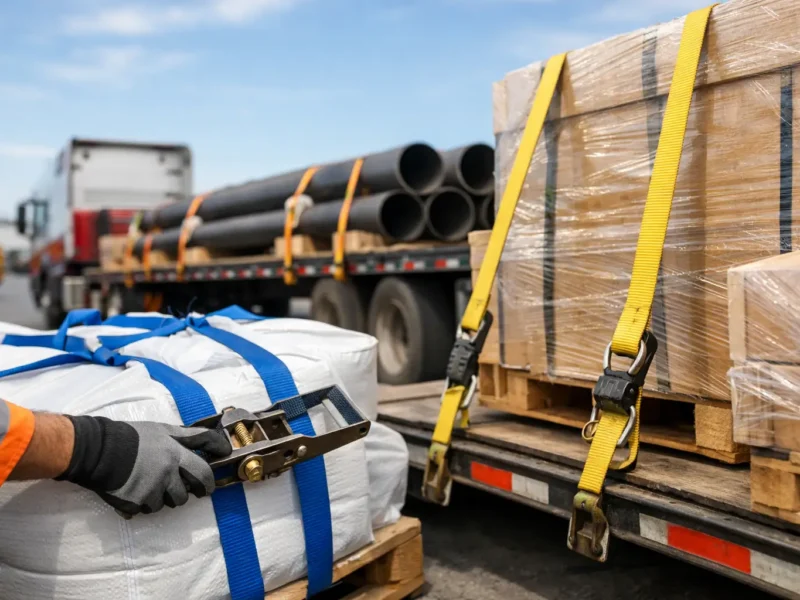
A load that looks stable at the dock can fail fast once it hits highway speed, rough rail joints, or an intermodal transfer. That is why a freight load securement guide matters in real operating conditions, not just on paper. The real job is controlling movement inside the trailer, container, or railcar before that movement turns into crushed product, rejected shipments, and claim costs.
For warehouse managers, packaging engineers, and freight teams, securement is rarely one decision. It is a system. Unitization, blocking, bracing, void filling, and equipment selection all work together. If one part is wrong, the rest of the load carries the risk.
What a freight load securement guide should actually solve
A useful securement plan does more than keep cargo upright when the doors open. It needs to reduce longitudinal, lateral, and vertical movement across the full trip. That includes acceleration, braking, cornering, vibration, impact, and mode changes between truck, rail, and intermodal.
The right method depends on what is being shipped and how it is packed. Palletized loads behave differently than paper rolls, metal components, bagged materials, or rigid containers. A light but crushable load may need different support than a dense, high-mass shipment. Securement is never one-size-fits-all, and using the wrong material can create a false sense of protection.
Start with the load, not the product catalog
Before selecting air bags, straps, or blocking materials, define the shipment conditions. Weight distribution is the first issue. If the load is uneven across the floor, securement devices may be forced to compensate for a problem they cannot fix.
Next, look at the packaging strength. Can the outer packaging handle contact pressure? Can pallets tolerate side force without collapsing? Dunnage air bags are effective for filling voids and stabilizing loads, but they rely on the load itself having enough structural integrity to accept the applied pressure.
Void size matters just as much. If the gap between loads is too wide, a standard bag may not perform as intended. If the gap is too small, the bag may not seat properly or may over-concentrate pressure. Trailer type, railcar geometry, and loading pattern all affect that decision.
Transport mode changes the risk profile. Over-the-road truck shipments usually deal with frequent braking, turning, and road vibration. Railcar movements can introduce harder impact forces and repeated slack action. Intermodal adds handling transitions that increase movement potential. A securement method that performs well in dry van truckload service may not be enough for rail.
The core securement methods
Most effective loads use a combination of methods rather than a single product. Stretch wrap and banding help maintain unitized pallets. Blocking and bracing restrict gross movement. Friction mats can help in some applications by reducing slide risk. Dunnage air bags fill voids and apply consistent lateral pressure between stable load faces.
The trade-off is simple. Mechanical methods such as wood blocking can provide rigid restraint, but they take labor, create disposal issues, and may reduce loading efficiency. air bags are faster and cleaner in many operations, but they must be correctly sized, properly inflated, and matched to the application. In many facilities, the best answer is not wood or air bags. It is knowing where each method performs best.
Where dunnage air bags fit
Dunnage air bags are designed to fill empty space between cargo units and reduce shifting during transit. They work especially well when there is a defined void and solid opposing load surfaces. In truck, rail, and intermodal service, that can mean better load stability, less product contact damage, and faster loading compared with slower manual bracing methods.
Bag construction matters. Kraft options and woven polypropylene options do not behave exactly the same in use. Valve quality matters too, especially when inflation speed and pressure retention affect loading efficiency. Inflator tools are part of the system, not an accessory afterthought.
A low-cost bag that inflates inconsistently or fails under pressure is not a savings. It is a claim waiting to happen.
Choosing the right air bag for the job
A practical freight load securement guide has to address selection, because performance starts there. The correct bag depends on void size, load weight, load surface condition, and transport mode.
If the void is narrow and the load is relatively uniform, a lighter-duty bag may be appropriate. If the shipment is heavy, the gaps are larger, or the mode includes rail impact, higher-performance construction is often the safer choice. The bag must be able to bridge the void and maintain pressure without overextending beyond its designed working range.
Surface shape also affects performance. Flat, stable faces give the best contact area. Irregular loads reduce the effective bearing surface and can increase stress points. In those cases, the answer may be a different bag size, a different loading pattern, or a combination of bracing and void fill.
This is where experienced product guidance matters. A bag should be chosen for the actual shipment conditions, not just because it is in stock or priced lower.
Inflation is where many loads go wrong
Incorrect inflation is one of the most common securement failures. Underinflation allows movement. Overinflation can damage packaging or overstress the bag. Neither problem is obvious if the team is rushing to close the trailer.
Operators need the right inflator setup, a repeatable process, and a clear understanding of target pressure for the application. Inflation should create firm contact, not excessive force. The bag should sit squarely in the void and engage the load faces evenly. If it twists, bulges awkwardly, or contacts sharp edges, performance will suffer.
Valve reliability also affects day-to-day loading consistency. When inflation and sealing are efficient, crews move faster and produce more predictable results. That matters in high-throughput facilities where securement delays can back up dock schedules.
Common securement mistakes that increase claims
Most cargo damage is not caused by a total system failure. It comes from small errors that stack up. A void is left unfilled because the gap looked minor. A bag is reused when it should not be. A heavy load is paired with packaging that cannot carry side pressure. Pallets with uneven heights create poor contact. Floor conditions are ignored.
Another common mistake is assuming a successful past load means the method is validated. Freight conditions vary by route, carrier, season, and handling intensity. What worked on a short regional truck move may fail on a cross-country intermodal shipment.
Documentation also matters. If teams do not standardize the securement method by SKU, pallet pattern, and mode, quality drifts over time. The result is avoidable variation in load performance.
Build a repeatable securement process
The strongest operations treat securement as a controlled packaging function, not a final dock task. That means defining acceptable void ranges, approved bag types, inflation procedures, and inspection points before the trailer is released.
It also means training by application. A team loading canned goods should not use the same assumptions as a team loading industrial components or palletized chemicals. The cargo characteristics drive the method.
Testing helps separate theory from field performance. In high-risk lanes or with frequent damage claims, reviewing load patterns and securement methods can quickly show where changes are needed. Often, modest changes in bag grade, size, or placement produce measurable reductions in damage.
For buyers, consistency from the supplier side matters just as much as consistency on the dock. Product quality, material standards, and post-production testing all affect whether the same bag performs the same way from order to order. That is one reason many shippers work with manufacturers that treat cargo securement as a performance issue, not just a commodity sale.
When to adjust your securement approach
If damage claims are rising, do not look only at carrier performance. Review the full load design. If product arrives scuffed, leaning, or compressed, there may be too much movement inside the conveyance even if the cargo remains technically in place.
If labor time is too high, the securement method may be slowing throughput more than necessary. air bags and efficient inflator systems can improve loading speed in the right application, but only when they are properly matched to the void and load profile.
If procurement is pushing for lower unit cost, look at total landed cost instead. A cheaper securement product that causes more damage, more rework, or more inconsistent loading is usually the more expensive option.
Plastix USA works with shippers that need that kind of application-based guidance because securement decisions affect freight costs, product condition, and customer satisfaction at the same time.
Good load securement is not about adding more material. It is about using the right restraint, in the right place, with the right consistency so the load arrives the same way it left your dock.