
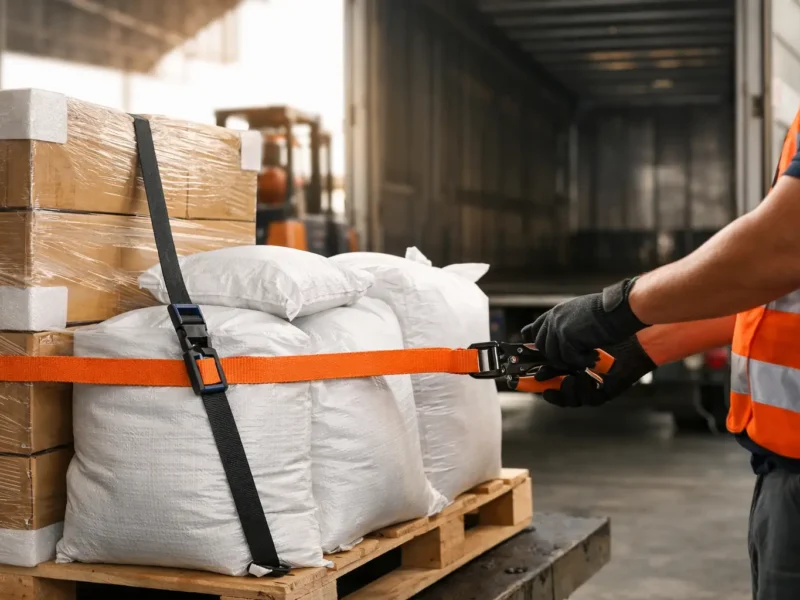
A load can leave the dock looking tight, wrapped, and compliant, then arrive with crushed corners, shifted pallets, or broken product. That gap is where claims, rework, customer complaints, and lost margin show up. If you want to know how to reduce shipping damage, start by looking beyond the carton and focusing on the full transport environment – packaging, pallet condition, voids, securement, and mode-specific movement all matter.
For most operations, shipping damage is not caused by one obvious failure. It is usually a chain of smaller decisions that looked acceptable on the dock. A slightly oversized void, a weak pallet, underinflated dunnage, uneven weight distribution, or stretch wrap that was never designed for the route can combine into a costly problem by the time the freight reaches its destination.
How to Reduce Shipping Damage at the Source
The first step is to identify where the damage is actually happening. Many teams treat all transit damage as a packaging problem, but that is only part of the picture. Product can fail inside the package, the package can fail on the pallet, or the unit load can fail inside the trailer, container, or railcar.
That distinction matters because the fix is different in each case. If cartons are collapsing under stacking pressure, you may need stronger board grade or better pallet pattern design. If pallets are walking or leaning in transit, the issue is load stability and void management. If freight is striking adjacent loads, then internal movement in the trailer or container is the likely cause.
The fastest way to improve results is to review claims by damage type, lane, carrier mode, and product family. A rail shipment with long transit times and repeated impacts needs a different securement plan than a short over-the-road run. Intermodal adds another layer because loads can be exposed to multiple handling events and changing vibration patterns. One standard for every shipment usually sounds efficient, but it often creates avoidable losses.
Start with Load Design, Not Just Outer Packaging
A strong carton does not guarantee a stable shipment. In freight transport, the unit load is what moves, shifts, compresses, and absorbs force. That means product arrangement, pallet quality, stack height, and center of gravity should be reviewed before you make changes to film gauge or add corner boards.
Pallets are often overlooked because they are treated as a commodity. In practice, inconsistent pallet quality drives a lot of preventable damage. Broken deck boards, weak stringers, poor dimensional consistency, and mismatched pallet sizes all reduce stability. If the base is compromised, the rest of the load is already at a disadvantage before it leaves the building.
Product placement matters just as much. Heavier items should be low and centered where possible. Irregular or top-heavy loads need more than stretch wrap to stay in position. If the top of the load can sway, lean, or settle, damage risk goes up quickly, especially on routes with hard braking, rail coupling impacts, or long vibration exposure.
Match packaging to actual transit conditions
A common mistake is selecting packaging based on warehouse handling alone. The dock environment is controlled. The trailer, container, and railcar are not. Freight can see lateral movement, shock, compression, temperature variation, and repeated vibration over many hours or days.
That means the right package is the one that performs under the real conditions of the lane. Sometimes that requires heavier protection. Sometimes it requires smarter internal bracing, better palletization, or more effective void fill rather than more material. More packaging is not always better if it adds cost without improving load stability.
Control Empty Space Inside the Load and Around It
If there is room for movement, freight will move. This is one of the most direct answers to how to reduce shipping damage. Empty space inside cartons, between stacked product, and between loads inside the trailer or container creates momentum. Once that movement starts, packaging is forced to absorb energy it was never meant to handle.
Inside the package, use inserts or partitions that prevent product-to-product contact and limit internal shifting. At the pallet level, reduce overhang and maintain a consistent footprint. Inside the transport vehicle, pay close attention to longitudinal and lateral voids. Even a well-built pallet can fail if it is allowed to slide into open space.
This is where dunnage air bags are often the most efficient option. When sized correctly for the void, matched to the load weight, and inflated properly, they help stabilize cargo and reduce load shift during transit. They are especially useful in truck, railcar, and intermodal applications where adjacent loads need consistent separation and support. The key is correct selection and use. A bag that is too small, placed incorrectly, or underinflated will not deliver the expected protection.
Not every void should be treated the same way
The right securement method depends on void size, mode of transport, product weight, and the surfaces involved. A light palletized load in a dry van may need a different approach than a heavy industrial shipment in a railcar. Kraft and woven dunnage bags, for example, each have applications where they make more sense based on pressure demands and operating conditions.
This is where experienced product guidance has value. The goal is not to add material everywhere. It is to apply the right level of restraint where movement is most likely.
Improve Load Securement Consistency on the Floor
Even a solid load plan will fail if application is inconsistent. Many damage issues come from variation between shifts, facilities, or individual operators. One team wraps 12 revolutions, another wraps 7. One operator inflates bags to the correct pressure, another stops early. Those differences create unpredictable results.
Standard work matters. Document how each load type should be built, wrapped, blocked, and braced. Define acceptable pallet condition, approved stack patterns, max heights, void tolerances, and securement requirements by mode. Then train to that standard and audit it.
Inflation practices deserve special attention. Dunnage air bags depend on proper pressure and placement. If air pressure is too low, the bag will not fully support the load. If the wrong valve or inflator setup is used, application speed and consistency suffer. For high-volume operations, small process improvements here can reduce damage while also improving throughput.
Account for Mode-Specific Risk
Truck, rail, and intermodal shipments do not behave the same way in transit. A practical damage-reduction program should reflect that reality.
Over-the-road truck shipments often deal with braking force, turns, and dock handling frequency. Rail can introduce stronger impact events and longer duration vibration. Intermodal can combine both, along with additional transfers. If your operation ships through multiple modes, do not assume one packaging and securement design will perform equally well across all of them.
This is also where cost trade-offs need honest evaluation. A lower-cost packaging setup may perform adequately on short, stable routes but fail on longer or rougher lanes. On the other hand, overengineering every shipment can drive unnecessary material and labor cost. The right answer depends on product value, claim exposure, route conditions, and customer tolerance for minor cosmetic versus functional damage.
Use Data to Reduce Repeat Damage
Damage reduction gets more effective when teams stop treating incidents as isolated events. Track recurring failure points. Look at SKU, package type, pallet pattern, carrier, mode, lane, season, and destination. Patterns show up faster than most companies expect.
Photos from shipping and receiving are useful, but only if someone reviews them against actual load standards. If the same corner crush, pallet lean, or side impact appears repeatedly, that is a process issue. It is not bad luck.
For many shippers, the biggest gains come from fixing the top 20 percent of repeat problems rather than redesigning every package. A few targeted corrections to void control, pallet quality, or air bag selection can remove a large share of claims.
Build for Performance, Not Appearance
Loads that look clean on the dock are not always the loads that perform best in transit. A smooth wrap job and neat carton edges can create false confidence. What matters is whether the shipment resists movement, absorbs expected forces, and arrives sellable.
That performance mindset should extend to supplier selection as well. Securement products need consistent material quality, reliable construction, and repeatable performance. If bag strength, valve quality, or production standards vary, your shipping results will vary with them. For operations that move high-value or high-volume freight, product consistency is not a minor detail. It is part of damage prevention.
When companies ask how to reduce shipping damage, the best answer is usually not a single product or quick fix. It is a tighter shipping system – better load design, stronger process control, smarter void management, and securement matched to the real risks of the route. If you treat transit as a controlled engineering problem instead of an unavoidable cost of doing business, damage rates usually start moving in the right direction fast.