
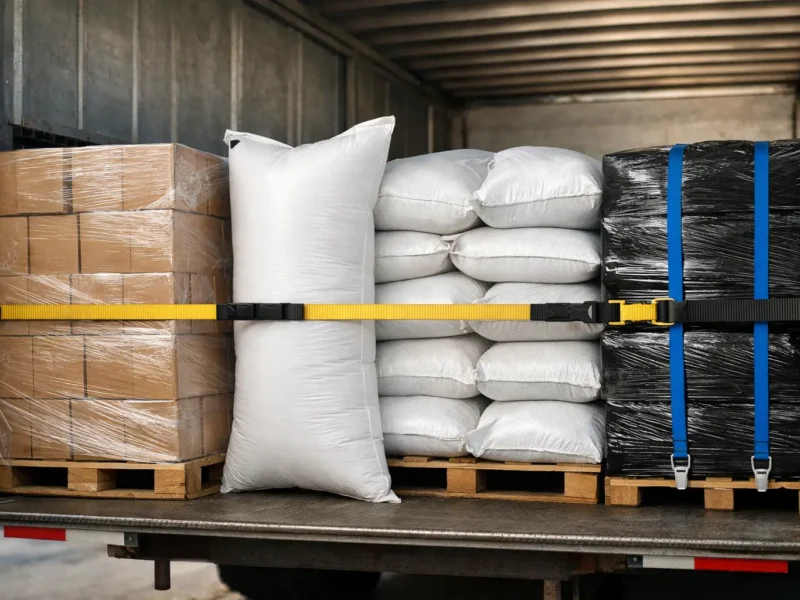
A load can leave the dock looking secure and still arrive damaged. The failure often starts in the open space between pallets, rolls, drums, or unitized product. As freight packaging trends continue to evolve, the strongest programs are moving beyond a one-size-fits-all approach to cargo securement. They are matching materials, load geometry, transport mode, and handling conditions before the trailer door closes.
For warehouse managers, packaging engineers, and freight coordinators, the goal is straightforward: prevent movement without adding unnecessary labor, material cost, or complexity. The practical changes happening across truck, rail, and intermodal shipping all point toward better load-specific decisions.
Freight Packaging Trends Are Becoming More Load-Specific
For years, many shippers treated void fill as an afterthought. A crew would load the trailer, identify the remaining gap, and use whatever blocking, bracing, or inflatable product was available. That approach can work for uniform, low-risk loads. It becomes unreliable when products vary by weight, pallet pattern, surface condition, or destination.
The current shift is toward selecting securement based on the actual shipment. That means measuring the void, considering the direction of likely movement, and choosing a dunnage solution with the right strength level and footprint. A small void between lightweight pallet loads does not require the same configuration as a long railcar gap holding dense industrial materials.
Void size matters, but it is not the only variable
A dunnage air bag must fill the available space effectively, but filling a void is not the same as restraining a load. Bag dimensions, inflation pressure, bag construction, and the contact area against the load all affect performance. If a bag is undersized, it may overexpand and lose useful contact. If it is too large for the space, installers may struggle to position it correctly or create uneven pressure.
Load weight also changes the decision. Heavy freight can generate significant force during braking, acceleration, coupling, and cornering. The bag must be suitable for the load and the transport environment, while the pallets or unit loads themselves must be stable enough to accept pressure. Inflating against weak packaging, damaged pallets, or irregular load faces can create problems instead of preventing them.
This is why more operations are standardizing shipment profiles. They document common load types, typical void ranges, mode of transport, and approved securement configurations. The result is less guesswork on the dock and more consistent protection across shifts and facilities.
Multi-modal shipping raises the standard
Intermodal freight has increased the need for careful cargo securement. A shipment may be handled by truck, rail, and container movements before it reaches its destination. Each transfer adds vibration, impact, and opportunities for a load to settle or shift.
Rail shipments deserve particular attention because railcar movement can introduce forces that differ from normal over-the-road conditions. Long transit times and repeated impacts make it especially important to use materials designed for the application and to follow the recommended installation method. A securement plan that is adequate for a short regional truckload may not be appropriate for a railcar or extended intermodal route.
Material Consistency Is a Bigger Buying Factor
Lower unit cost is no longer the only purchasing metric. Freight damage, rejected deliveries, production interruptions, and claims can quickly outweigh a small savings on cargo-securement materials. Buyers are putting more weight on consistent construction, documented quality controls, and dependable sourcing.
A dunnage bag is a simple product in use, but its performance depends on details that are easy to overlook: paper ply quality, woven fabric construction, inner bladder integrity, valve reliability, adhesive performance, and production consistency. A bag that looks acceptable at receiving may fail when it is inflated, exposed to transit vibration, or used with a high-pressure inflation system.
Testing supports repeatable performance
Shippers increasingly want confidence that the products they buy will perform like the samples and previous orders they have used. That makes in-process inspection and post-production testing meaningful. Consistency helps operations write reliable work instructions, train loaders with confidence, and avoid changing installation practices every time a new lot arrives.
For procurement teams, this also changes the supplier conversation. Ask how materials are sourced, how lots are checked, and whether the supplier can explain the intended application for each bag type. A supplier should be able to discuss the difference between kraft, PP woven, and PE air bags without steering every shipment toward the same product.
Labor Efficiency Is Driving Better Inflation Practices
Dock labor remains a major concern for shippers. The best securement material is of limited value if it is slow to install, difficult to inflate correctly, or frequently applied the wrong way. This is pushing more facilities to review their inflator tools, valve types, and training methods.
A compatible inflator can reduce installation time and help crews achieve proper inflation more consistently. It also helps prevent improvised methods that may damage valves, underinflate the bag, or create unsafe working conditions. The right tool depends on the bag valve and the facility’s air supply, so compatibility should be confirmed before ordering in volume.
Clear work instructions matter just as much. A good instruction should show where the bag goes, what it contacts, how it is inflated, and what the installer should inspect before closing the load. Photos of actual shipping configurations are often more useful to a dock team than generic diagrams.
Recyclability Is Becoming a Practical Requirement
Sustainability discussions in freight packaging are becoming more operational. Customers want to reduce waste, but they also need materials that perform under real shipping conditions. The useful question is not whether a product has a sustainability claim. It is whether the material can fit the facility’s disposal or recycling process without compromising cargo protection.
Recyclable dunnage options can support waste-reduction goals, particularly in high-volume shipping operations. Still, the correct product choice depends on the load. A lighter material may be appropriate for certain applications, while a heavier-duty construction may be necessary for demanding freight. Damage prevention remains part of sustainability because destroyed product, replacement shipments, and disposal all carry an environmental cost.
How to Apply Freight Packaging Trends to Your Operation
A practical review should begin with shipments that produce the most claims, rework, or loading delays. Do not start by replacing every material in the warehouse. Focus first on recurring problems, such as shifting pallet loads, crushed product, unstable drum shipments, or inconsistent void sizes.
For each priority shipment, document four factors:
- The product weight, pallet condition, and load face strength
- The void width, height, and location within the trailer, railcar, or container
- The shipping mode, route length, and expected handling conditions
- The current securement method, installation time, and damage history
This information makes it easier to identify whether the problem is the bag type, bag size, inflation process, pallet pattern, or an issue with the product unitization itself. Not every damaged load needs a stronger dunnage bag. Sometimes the more effective fix is tighter pallet wrapping, improved blocking, a different loading pattern, or better distribution of weight.
Standardize where it makes sense
Once a configuration performs well, standardize it for that shipment profile. Keep the approved bag size, material type, valve, and inflator tool together in the work instruction. This reduces purchasing variation and helps loaders avoid grabbing an unsuitable product when the dock is busy.
Standardization should not become rigidity. If void sizes change due to a new pallet footprint, product line, or trailer type, revisit the configuration. A securement plan should be stable enough for repeatable operations and flexible enough to respond to real changes in freight conditions.
Use supplier guidance before a claim forces the issue
When a shipment involves unusual dimensions, high-value cargo, rail movement, or repeated damage, product selection should not be based on a catalog photo alone. Ask for guidance using the actual load details. A qualified supplier can help narrow the options based on void size, freight weight, transport mode, and available inflation equipment.
Plastix USA supports this approach with product samples, quoting assistance, and application guidance for shippers selecting dunnage air bags and related securement products. That conversation is most productive when the shipping team provides photos, measurements, and a clear description of the load path.
The freight packaging trend worth following is not a new material for its own sake. It is the discipline of treating cargo securement as part of the shipment design. When the correct dunnage configuration is chosen before loading begins, the dock works faster, the load stays stable, and the receiving team sees the product as it was shipped.