
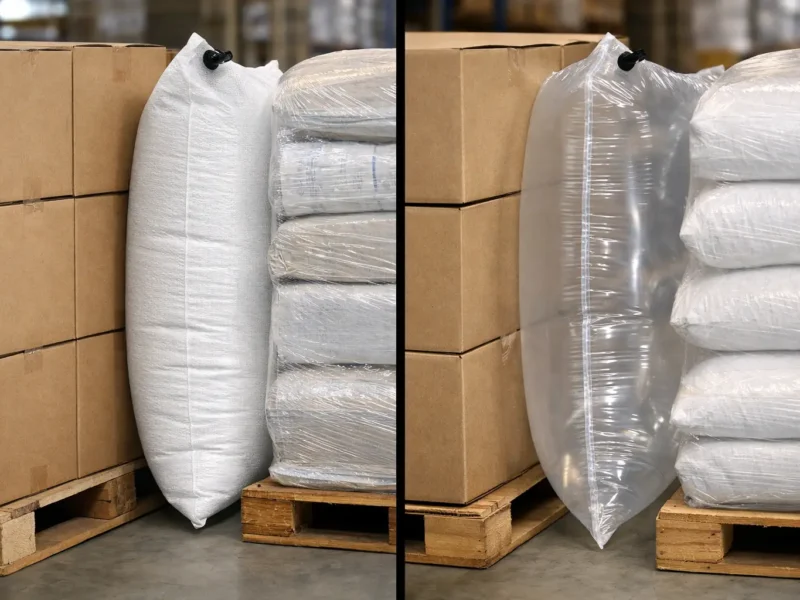
A PP woven vs PE airbags decision is not a cosmetic packaging choice. It affects how well a load stays positioned when a truck brakes hard, a railcar takes impact, or an intermodal container changes hands. The right dunnage bag helps prevent product damage, rejected deliveries, freight claims, and the labor cost of restacking shifted cargo.
Both options are designed to fill voids between loads and create lateral support. The difference is in construction, durability, intended use, and the conditions each bag can reasonably handle. Buyers should start with the shipment, not the bag material: cargo weight, pallet condition, void size, trailer or railcar environment, and expected handling all matter.
What PP Woven Dunnage Bags Are Built to Do
PP woven dunnage bags use an outer layer made from woven polypropylene. This fabric-like construction provides the bag with high tear resistance and better protection against abrasion, punctures, and rough load surfaces. Inside the woven outer bag is typically a polyethylene bladder that holds the air.
The woven exterior is the practical advantage. Industrial freight rarely presents a clean, smooth contact surface. Pallets may have splinters, exposed nail heads, uneven deck boards, sharp carton edges, metal banding, or rough corrugated packaging. A PP woven bag is designed for applications where those conditions are more likely and where a bag failure would create a meaningful cargo risk.
These bags are commonly selected for heavier palletized shipments, railcar loads, multi-stop truck shipments, and intermodal moves. They are also a sound choice when cargo has a long transit cycle or will encounter repeated vibration and impact. The higher material cost can be justified when the load value, claim exposure, or disruption caused by a shift is substantial.
PP woven bags are not automatically the correct answer for every shipment. If the cargo is light, the void is small, and the transportation route is predictable, a heavier-duty bag may add cost without adding practical value. The goal is appropriate containment, not simply buying the strongest bag available.
How PE Airbags Differ
PE airbags are made primarily from polyethylene film. They are generally lighter and more economical than PP woven bags, making them useful for lower-demand applications where cargo surfaces are smooth and the risk of abrasion is limited.
For many warehouse and truckload operations, PE airbags provide an efficient way to stabilize standard palletized freight. They can be a practical fit for lightweight to moderate loads, short-distance shipments, and loads with uniform carton faces that will not aggressively wear against the bag. Their lighter construction can also simplify handling and reduce material expense on high-volume shipments.
The trade-off is lower resistance to puncture and abrasion compared with a woven polypropylene outer layer. A PE bag placed against a damaged pallet, sharp edge, or exposed hardware has less protection. It may also be less suitable for demanding rail environments, rough intermodal handling, or high-force void-fill applications.
PE airbags should not be treated as disposable insurance for an unstable load. They still need correct placement, proper inflation, and a load pattern that allows the bag to contact stable, supported surfaces. A poorly positioned bag can fail to control movement regardless of the film thickness or air pressure used.
PP Woven vs PE Airbags by Shipping Application
The most useful way to compare PP woven vs PE airbags is by the actual transportation risk.
Over-the-road truckloads
For standard truckload shipping, either bag type may work. PE airbags can be a cost-effective option for light to moderate pallet loads with clean, consistent surfaces and relatively controlled routes. PP woven bags are better suited to heavier freight, irregular pallets, long hauls, or shipments where the load may see frequent stops and starts.
Truckload cargo can shift because of braking, turning, uneven roads, and gaps that are too large for the selected bag. The bag should fill the void without being stretched into a position where it bears against corners or unsupported pallet faces.
Railcar shipments
Rail introduces a more demanding operating environment. Coupling impacts, vibration, and longer transit periods can place substantial force on cargo securement systems. PP woven dunnage bags are often the more appropriate choice when railcar loads require greater resistance to abrasion and higher confidence in the outer bag construction.
Rail shippers should also verify the required performance level for the specific car, commodity, and loading method. Bag material is only one part of the decision. The bag’s tested rating, dimensions, valve system, inflation method, and placement must align with the shipment requirements.
Intermodal freight
Intermodal loads combine risks. A container or trailer may move by truck, rail, and terminal equipment before it reaches its destination. That longer handling chain makes load stability especially important. PP woven bags are frequently selected when cargo is heavy, valuable, or exposed to rougher conditions across multiple transport modes.
PE airbags can still make sense for controlled intermodal applications with lighter cargo and well-protected load faces. The key is avoiding an assumption that intermodal automatically requires one material. Review the shipment’s weight, void dimensions, pallet quality, and anticipated transit conditions before specifying the bag.
Material Is Only One Part of Bag Selection
A dunnage bag cannot correct a poor loading pattern. Before choosing between PP woven and PE, inspect the load configuration. Cargo must be blocked, braced, or arranged so the bag supports the load rather than becoming the only thing preventing collapse.
Void size is critical. Bags should be selected to fill the gap at the recommended inflation range, not inflated excessively to compensate for an oversized void. Overinflation can place unnecessary stress on the bag and the cargo. A bag that is too small for the gap may not create enough contact to restrain movement.
Load weight and surface condition matter just as much. Heavy loads create more force during transportation. Rough pallets and sharp contact points increase puncture risk. When those factors are present, a woven polypropylene outer bag generally provides a larger margin of protection.
Inflation equipment also affects results. Use an inflator and valve system designed for the selected dunnage bag. Controlled inflation helps crews reach the appropriate pressure efficiently and consistently. Inflating bags with unregulated shop air or improvised tools can lead to damaged valves, uneven filling, or pressure levels that do not match the bag’s intended use.
Questions to Ask Before Ordering
Procurement teams often focus first on unit price. That is understandable, but the better question is the total cost of securing the load. A lower-cost bag is not a savings if it is mismatched to the application and contributes to cargo damage or a claim.
Before ordering, confirm the transport mode, cargo weight, load dimensions, average void size, pallet or packaging condition, and whether the shipment needs to meet a specific carrier or rail requirement. Also consider whether the same bag will be used across several facilities or load types. Standardizing on too few bag options can simplify purchasing, but it can also force crews to use an unsuitable bag when conditions change.
Samples and application guidance are especially useful when a load has unusual geometry, high product value, or a history of shifting. A practical trial should evaluate installation time, inflation access, contact points, and post-transit load condition. The right bag should support both cargo protection and a repeatable warehouse process.
Choose for the Risk You Actually Carry
PP woven dunnage bags are generally the stronger choice for heavier, rougher, longer, or more demanding freight applications. PE airbags are often the efficient choice for lighter, smoother, and more controlled shipments. Neither material is universally better. The correct selection depends on what the cargo will encounter between the dock and the destination.
When the cost of load movement is high, specify the bag based on the shipment conditions rather than habit. Plastix USA can help match bag construction, size, valve, and inflation equipment to the void and transport environment so crews can load with confidence before the trailer door closes.