
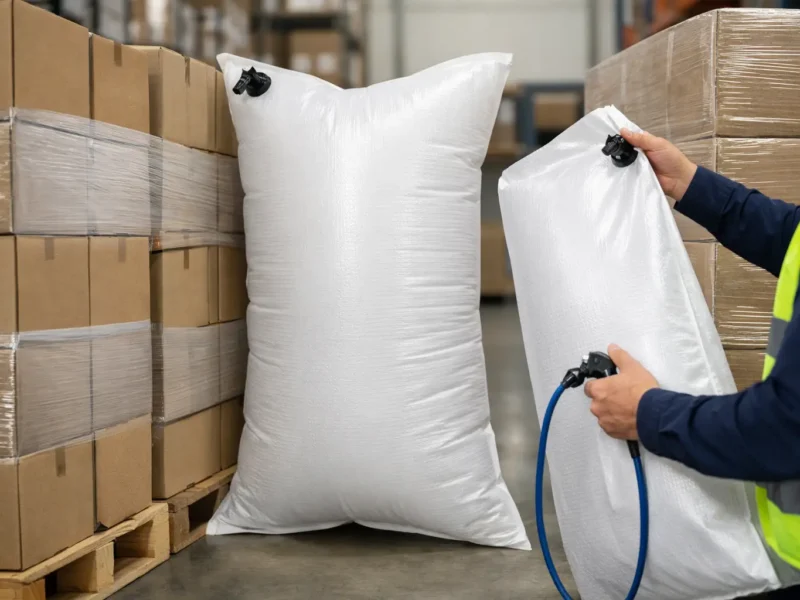
A load can leave the dock looking tight and still arrive with crushed corners, shifted pallets, or a rejected claim. In most cases, the problem is not whether a bag was used. It is whether the bag was the right size and level for the void, the load weight, and the mode of transport. If you are figuring out how to size dunnage airbags, the goal is simple: fill the gap correctly without overextending the bag or under-supporting the cargo.
Getting that right starts with understanding what the airbag is actually doing. A dunnage airbag is not there to force cargo into place or compensate for poor loading. Its job is to occupy void space and apply enough lateral pressure to reduce movement during transit. The bag has to match the gap, but it also has to match the force it will face once the trailer, container, or railcar is in motion.
How to size dunnage airbags for real load conditions
The most common sizing mistake is choosing by guesswork. Teams often measure the visible gap, pick a bag that seems close, and move on. That approach may work on light, stable freight over short truck routes. It breaks down fast when the load is heavy, stacked high, or moving by rail.
To size correctly, you need to look at four variables together: void size, package dimensions, cargo weight, and transportation mode. One number by itself does not tell you enough.
Start with the void size
Measure the gap between the two load faces where the bag will sit. This is the first dimension that matters, but it is not the only one. Dunnage airbags are designed to perform within a recommended void range. If the gap is too narrow, the bag may not inflate properly. If the gap is too wide, the bag can bulge, overextend, or fail under pressure.
As a rule, the bag should fill the void without being stretched beyond its working range. A bag that is too small for the gap does not create enough contact area. A bag that is too large can fold, wrinkle, or inflate unevenly, which reduces performance.
You also need to account for variation. If the void changes from load to load, size for the actual operating range, not the ideal one you saw on a single shipment.
Check the face area against the cargo
Once the gap is measured, the next question is whether the bag has enough surface contact with the cargo. This is where bag width and height matter.
The airbag should contact as much of the opposing load surface as practical. If only a narrow strip of the bag touches the product, the force is concentrated into a small area. That can damage packaging, reduce stability, or cause the bag to slip out of position.
In palletized loads, the bag should generally span a meaningful portion of the pallet face, not just wedge between a few carton edges. With rigid industrial products, flat and consistent contact is even more important because point loading can create high stress on both the bag and the cargo.
This is why two loads with the same void may need different bag sizes. A tall, stable pallet stack and a short, dense machine crate do not present the same contact surface.
Bag size is only part of the decision
A larger bag is not automatically a better solution. Buyers sometimes assume that if the bag fills the space, it will do the job. In practice, bag level and construction are just as important as dimensions.
Match the bag level to load weight and mode
Dunnage airbags are typically selected by performance level as well as size. Heavier loads and more aggressive transit conditions require higher-strength bags. Truck, rail, and intermodal shipments create different force profiles, and rail generally demands more securement performance than standard over-the-road freight.
A light load of consumer goods moving a short distance by truck may perform well with a lower-level bag. A dense industrial shipment moving in a railcar may require a higher-level option designed for greater pressure resistance and load containment.
If the bag size is correct but the bag level is too low, the securement system can still fail. That is why the sizing conversation should always include weight per unit, total load weight, and transportation environment.
Consider inflation thickness, not just flat size
Flat bag dimensions can be misleading if you treat them like the final installed size. Once inflated, the bag expands into the void and changes shape. The usable inflated thickness depends on the bag design, recommended pressure, and the shape of the surrounding cargo.
That matters because a bag may look large enough on paper but still be outside its safe operating void when installed. Good sizing means selecting a bag intended to perform in that actual gap at the correct inflation pressure, not forcing a close match.
How transport mode changes sizing decisions
If you ship across multiple channels, this is where a one-size-fits-all approach usually causes trouble.
Truck shipments
Truck loads often allow more flexibility, especially when voids are moderate and cargo is well unitized. The key risk is repeated braking, cornering, and vibration. For truck applications, sizing is often driven by practical fit, adequate face contact, and the need to prevent gradual lateral migration during transit.
That said, heavy truck shipments still require disciplined bag selection. A wide void with dense product can overpower an under-spec bag even on short runs.
Railcar shipments
Rail introduces stronger impact forces, coupling shock, and longer transit exposure. Bag sizing for rail is less forgiving. The contact area must be solid, the bag level must match the load demand, and the void range must stay within product limits.
Rail loads also tend to magnify loading inconsistencies. If the gap varies substantially across the face of the cargo, a bag can inflate into the largest opening and leave other areas under-supported. In those cases, load layout and placement matter as much as bag size.
Intermodal shipments
Intermodal combines different movement profiles in a single trip. A shipment may see trucking vibration, container handling, and rail-related impacts. That means sizing decisions should reflect the most demanding part of the route, not the least demanding.
For many shippers, this is where a more conservative bag selection makes sense.
Common mistakes when sizing dunnage airbags
Some errors show up again and again in damaged-load reviews.
The first is sizing only to the void and ignoring load weight. The second is choosing a bag with too little face area for the cargo geometry. The third is trying to use one standard size across very different products just to simplify purchasing.
Another common issue is overinflation. If a bag is undersized for the gap, operators may try to compensate by adding more air. That does not solve the problem. It increases stress on the bag and can create unsafe loading conditions.
Improper placement also affects sizing outcomes. Even the right bag can perform poorly if it is installed too high, too low, or against unstable product surfaces.
A practical way to make the right selection
If you want a repeatable sizing process, start by documenting the load pattern. Measure the typical void width, the height and width of the contact area, the product type, and the shipment mode. Then identify the load weight the bag will need to restrain.
From there, match the application to the appropriate bag level and recommended void range. Confirm that the inflated bag will make broad, stable contact with the cargo faces. If the load is irregular, stacked inconsistently, or subject to rougher transit, build in margin rather than sizing to the minimum requirement.
This is also where testing and supplier guidance matter. A dependable supplier should be able to review your shipment profile and recommend the right bag construction, dimensions, and inflation tools for the job. For operations with recurring freight damage, that consultative step usually costs less than one preventable claim.
Plastix USA works with shippers that need this kind of application-based selection because the correct answer depends on how the product is loaded, what it weighs, and where it is going.
When the answer is “it depends”
There is no credible sizing chart that solves every application by bag dimensions alone. A 12-inch void between light pallet loads is not the same as a 12-inch void between heavy paper rolls or metal components. The cargo stiffness, the packaging strength, and the transport mode all change the securement requirement.
That is why experienced buyers treat dunnage airbag sizing as part of load design, not a last-minute accessory decision. The right bag protects product, reduces claims, and supports faster, more consistent loading. The wrong one creates a false sense of security.
If you are evaluating how to size dunnage airbags for your operation, the best next step is to size them to the actual load conditions you ship every day, not the average case you hope will hold.