
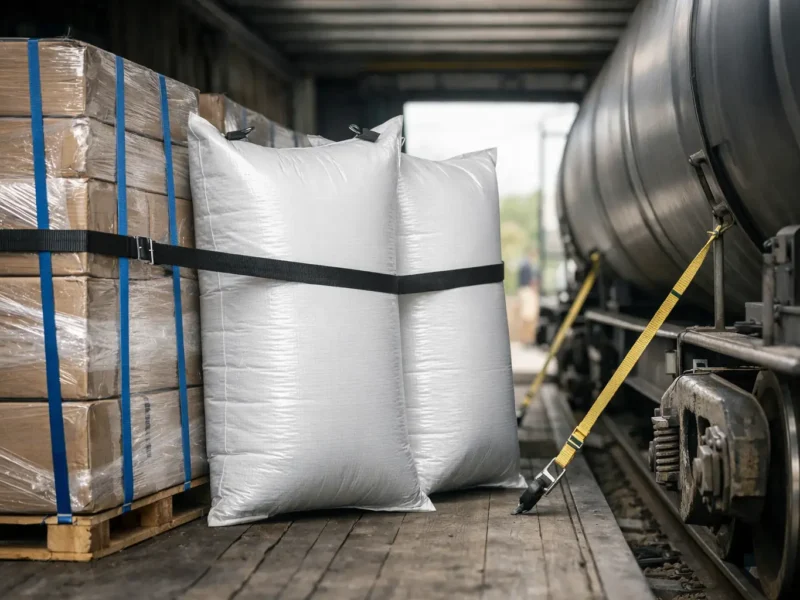
A railcar can travel thousands of miles, change yards multiple times, and experience forces that are not visible at the loading dock. A practical railcar securement guide starts with that reality: cargo must remain stable through coupling impacts, acceleration, braking, vibration, curves, and temperature changes. A load that looks secure when the doors close can still arrive shifted, damaged, or rejected if the securement plan does not account for the entire trip.
For warehouse managers, packaging engineers, and freight coordinators, railcar securement is not a last-step loading task. It is a planned system of load design, blocking and bracing, void management, inspection, and documentation. The right approach reduces cargo damage, claim exposure, unloading hazards, and avoidable rework at destination.
Start With the Railcar, Load, and Route
Securement requirements depend on more than product weight. The railcar type, interior condition, commodity, package configuration, loading pattern, void size, and expected handling all affect the method that will perform reliably. A dense palletized load in a boxcar presents different risks than bundled metal, bagged resin, machinery, drums, or unitized building materials.
Begin by confirming the railcar’s usable interior dimensions, door opening, floor condition, wall condition, and any existing anchor points or loading restrictions. Inspect for protruding hardware, damaged floors, moisture intrusion, loose debris, and wall damage before loading begins. A compromised railcar interior can defeat otherwise sound securement materials.
The route also matters. Long-distance rail shipments, interchange moves, and intermodal transfers may create more opportunities for impact and vibration than a short, controlled move. If the shipment has a history of damage, do not assume the previous securement method was adequate simply because it was used before. Review where movement occurred and whether the issue was inadequate restraint, excessive void space, weakened packaging, or poor load distribution.
Build a Securement Plan Before Loading
The strongest railcar securement plan manages movement in every direction. Cargo can shift lengthwise during coupling and braking, laterally during curves, and vertically when equipment encounters track irregularities. The loading crew needs clear instructions for preventing each type of movement.
Load distribution comes first. Keep weight balanced from side to side and distributed according to the railcar’s loading limits. Concentrating heavy product in one location can affect car performance and create an unstable load, even when individual pallets appear properly secured. Follow applicable rail carrier, customer, commodity, and loading-rule requirements for the equipment and product being shipped.
Next, establish a loading pattern that creates stable, uniform contact between units. Pallets should be in sound condition, with product properly unitized and stretch wrapped, strapped, or otherwise contained as needed. Securement materials cannot compensate for crushed cartons, broken pallet decks, loose bands, or unstable stacks. If the product itself is not prepared for transportation, the railcar is the wrong place to solve that problem.
For many loads, the plan combines direct restraint with void management. Blocking, bracing, load bars, straps, netting, bulkheads, or other approved materials may be needed to resist the primary forces of movement. Dunnage airbags are then used to fill remaining voids and maintain load contact. The exact combination depends on the commodity, void dimensions, load weight, and railcar configuration.
Use Dunnage Air Bags for Void Control
Void space is one of the most common causes of load shift. Even a small gap between palletized units can grow into a larger problem after repeated impacts and vibration. When cargo has room to move, it gains momentum. That movement can crush cartons, break unit loads, damage railcar walls, or create an unsafe condition when doors are opened.
Dunnage air bags are designed to fill voids between loads or between a load and the railcar wall, helping stabilize cargo during transport. They are available in different constructions and performance levels, including PP woven, kraft, and polyethylene options. The appropriate bag is based on the application, not just the gap size.
A heavier load or a more demanding rail environment may require a higher-performance bag construction and a more carefully engineered blocking and bracing arrangement. A lighter, consistently palletized shipment may have different needs. The bag must fit the void properly when inflated. A bag that is too narrow may not contact both surfaces effectively, while an oversized bag may fold, bulge, or inflate unevenly.
Air bags should be positioned against stable, reasonably flat load surfaces. Do not place them against sharp edges, exposed nails, irregular metal, or damaged packaging without suitable protection. Use edge protection or a buffering material where needed to reduce puncture risk. The goal is broad, even contact that transfers pressure across the load without damaging the product.
Inflate bags only with the correct inflator tool and valve system, following the bag manufacturer’s recommended pressure and application instructions. Overinflation can damage cargo or the bag. Underinflation leaves room for movement. A crew should never treat inflation as a visual guess based solely on how firm a bag feels.
Blocking and Bracing Still Matter
Dunnage airbags are highly effective for filling voids and maintaining lateral stability, but they are not a substitute for a complete securement design. Where a load requires positive restraint against longitudinal movement, use properly designed blocking, bracing, or other approved restraint methods.
This distinction matters most on heavy, high-value, irregular, or rigid cargo. Rail impacts can produce substantial force. If the load can move lengthwise, an air bag positioned in a side void will not solve that problem. Likewise, a brace that is not correctly attached or rated for the expected load can fail even if the rest of the car looks tightly packed.
Material quality is also part of the equation. Lumber, fasteners, straps, and load-securing components must be compatible with the load and installed correctly. Damaged wood, improvised attachments, and mixed materials without a defined plan increase risk. Consistency is often more valuable than a low initial material cost when a failed shipment can result in product loss, railcar damage, detention, and claims.
Inspect the Load at Each Critical Point
A good securement process includes inspection before, during, and after loading. The final check should not be performed only from the doorway. A trained inspector should verify that the load pattern matches the planned configuration, all voids are addressed, airbags are correctly placed and inflated, and blocking or bracing is secure.
Before closing the railcar, check these critical conditions:
- Cargo is distributed within the railcar’s permitted loading limits and does not lean or overhang.
- Pallets, unit loads, and product packaging are intact, stable, and free of obvious damage.
- Blocking, bracing, straps, and other restraints are installed according to the approved loading method.
- Dunnage bags contact stable surfaces, are protected from puncture hazards, and are inflated to the specified pressure.
- Doors can close without contacting cargo or securement materials, and the doorway area is safe for unloading.
Photographs and load records can be useful, particularly for high-value cargo, new loading patterns, recurring claims, or customer-specific requirements. Documentation does not prevent damage, but it helps identify whether a failure originated in product packaging, loading execution, railcar condition, or the securement design itself.
Avoid Common Railcar Securement Failures
The most expensive failures often begin with small shortcuts. One is treating every load as a standard pallet load. A change in pallet height, product density, stretch-wrap pattern, or void size can change how the cargo performs in transit. Another is reusing damaged or contaminated securement materials. Moisture, abrasion, and prior impacts can reduce performance in ways that are not obvious at a glance.
Improper bag selection is another common problem. Selecting an air bag solely by price or nominal size can create an unreliable solution. Consider the load weight, void width, rail environment, contact surface, inflation method, and applicable performance requirements. A supplier that can review application details before shipment is often more valuable than one that simply sells a standard item.
Finally, avoid relying on door pressure as cargo restraint. Railcar doors are not a substitute for internal securement. A load should remain stable when the door is opened, not depend on the door to hold it in place.
Make Securement Repeatable Across Locations
The best railcar loading programs are repeatable. They use documented load diagrams, standardized material specifications, crew training, and routine inspection. This is particularly important for companies loading at multiple plants, using temporary labor, or shipping products with seasonal changes in packaging and volume.
Work with a securement supplier that can help match bag construction, dimensions, valves, and inflator tools to the actual application. Plastix USA can provide samples and application guidance when a shipper needs to evaluate a void-fill solution before standardizing it across operations.
A railcar load should leave the facility with more than enough material in the voids. It should leave with a securement method that accounts for the product, the equipment, and the forces waiting beyond the loading dock.