
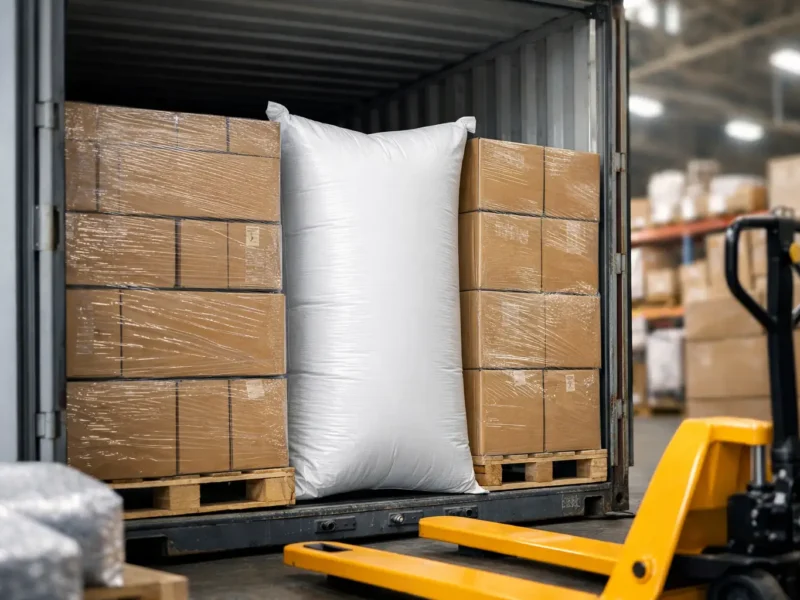
A low unit price does not protect a load if the bag is the wrong size, the pressure rating does not fit the shipment, or the inflator cannot support the operation. Custom dunnage bag quoting should begin with the conditions inside the trailer, railcar, or container – not with a bag price alone. The right quote gives your team a cargo-securement solution that fits the load, route, handling process, and purchasing requirements.
For shippers moving palletized goods, paper rolls, drums, building materials, or industrial components, that detail matters. A bag that fills the void correctly can reduce load movement and damage claims. A bag selected without enough information can create delays, inconsistent performance, or a false sense of security.
What a Custom Dunnage Bag Quote Should Accomplish
A useful quote does more than identify a product and an amount. It should help confirm the appropriate bag construction, dimensions, quantity, valve configuration, and inflation method for the application. It should also give procurement a clear basis for comparing supply options without treating unlike products as equivalent.
Dunnage bags are not interchangeable simply because their stated dimensions look similar. Kraft paper, PP woven, and PE air bags serve different load conditions and transport needs. Ply count, outer construction, liner quality, valve design, working pressure, and quality controls all affect how a bag performs when cargo begins to shift.
The goal is to specify enough protection to control the expected forces without paying for unnecessary capacity. That balance depends on the cargo and the shipment. A light, stable pallet load may need a different solution than dense unitized freight moving through rail and intermodal channels, where impacts and vibration can be more severe.
Information Needed for Custom Dunnage Bag Quoting
The fastest way to receive an accurate recommendation is to provide a complete picture of the shipment. If every detail is not available, a photo of the loaded equipment and a few basic dimensions can still move the process forward. The key is to describe the actual void and load arrangement, not just the product being shipped.
For a quote, prepare these details:
- Transport mode: OTR truck, railcar, ocean container, or intermodal shipment.
- Cargo type, pallet pattern, approximate weight, and whether the load is stackable or prone to movement.
- Void width, height, and depth at the point where the bag will be installed.
- Desired bag quantity per load and estimated monthly or annual usage.
- Available inflation equipment, including whether the facility uses a standard shop-air connection.
- Any customer, plant, carrier, or internal specification the product must meet.
Void size deserves particular attention. A bag must be sized to fill the open space effectively without being stretched into an improper shape. An oversized bag can become difficult to position and may not provide even contact. An undersized bag may require excessive inflation or fail to stabilize the load across the full void. Measurements should reflect the space after the cargo is loaded, including any irregularities caused by pallet overhang, slip sheets, or uneven unit loads.
Transport Mode Changes the Recommendation
A load that performs well in a short-haul trailer may need a different dunnage configuration for rail or intermodal service. Longer routes, repeated handling, vibration, acceleration, and impact events increase the demands placed on cargo securement.
That does not mean every shipment requires the highest-rated bag available. Over-specifying adds cost and can complicate buying. It means the quote should account for the route rather than assuming all freight sees the same conditions. If loads move through multiple modes, state that early in the request. It prevents a truck-only recommendation from being applied to a railcar or container movement later.
Choose the Bag Construction Before Comparing Prices
Price comparisons are only meaningful when the products being compared have similar performance characteristics. A lower-cost bag with different material construction, fewer plies, or a lesser valve system may not be an equivalent substitute.
Kraft dunnage bags are commonly selected for applications requiring dependable void fill and cargo stabilization in truck, rail, and intermodal shipments. PP woven dunnage bags offer strong outer-layer durability and can be a practical choice where abrasion resistance and demanding handling conditions are factors. PE air bags are often suited to lighter-duty applications or specific packaging environments where a polyethylene format makes operational sense.
The right choice depends on the shipment, not a general preference for one material. A packaging engineer may prioritize bag performance under heavier loads, while a warehouse manager may focus on faster installation and a consistent inflation process. Procurement may need predictable lead times, pack quantities, and an approved supplier profile. A well-prepared quote addresses all three concerns.
Plastix USA can evaluate these factors with the shipment details and recommend a bag format that supports the intended use rather than pushing a one-size-fits-all product.
Do Not Overlook Valves and Inflation Tools
A bag is only as useful as the inflation process allows it to be. The valve and inflator tool affect speed, air retention, operator control, and repeatability on the loading dock. If the facility uses shop air, confirm the connection type and available air supply. If crews load trailers away from a fixed air source, portable inflation options may be more appropriate.
This is also where operational habits matter. A high-volume shipping area may benefit from equipment that reduces handling time and makes proper inflation easier to repeat across shifts. A lower-volume operation may place more value on straightforward tools and minimal equipment investment. Neither approach is automatically better. The correct choice is the one that workers can use consistently without creating a bottleneck at the dock.
Ask whether valves and inflators are included in the requested pricing or quoted separately. This avoids a common purchasing problem: receiving bags that are ready for use in theory but lacking the compatible equipment needed to inflate them efficiently.
How Quantity Affects Price and Supply Planning
Custom quoting should include the anticipated order volume, but it should also reflect usage patterns. A customer using 500 bags once per quarter has different inventory needs than one consuming 10,000 bags every month. Ordering in larger quantities can improve unit cost and reduce the frequency of purchase orders, receiving activity, and freight charges. It can also tie up storage space and working capital.
The best order quantity is usually a practical inventory decision, not simply the largest price break. Consider available warehouse space, seasonality, supplier lead time, and the risk of running out during a busy shipping period. For critical operations, maintaining a defined safety stock can be less expensive than dealing with a delayed shipment, damaged cargo, or an emergency purchase.
When requesting pricing, identify whether you need a one-time project quantity, a recurring blanket order, or a scheduled release program. That information helps align packaging, delivery timing, and inventory support with your operation.
Common Gaps That Slow Down a Quote
The most common quoting delays are avoidable. Requests that ask for “bags for pallets” without void dimensions, transport mode, or load weight leave too much open to assumption. The result may be repeated emails, a generic product recommendation, or pricing that needs to be revised once the application is understood.
Another issue is quoting strictly from an old part number. A previous bag may still be appropriate, but cargo configuration, pallet dimensions, route, or inflation equipment may have changed. A quick review can confirm that the existing specification still fits the operation.
Photos are especially helpful when the load is irregular or the void is difficult to describe. Show the cargo from the rear of the trailer or container, the gap where the bag will sit, and any blocking or bracing already in place. If the shipment has experienced damage, photos of that condition can help identify whether bag size, placement, or overall securement needs to change.
Turn the Quote Into a Repeatable Load-Securement Standard
Once the correct configuration is established, document it for the people who load freight. Record the bag type and size, placement location, inflation method, and any required inspection steps. A simple dock-level instruction can prevent a proven specification from being replaced with an available but unsuitable bag during a busy shift.
For new applications, testing a sample before a full purchase is often the sensible path. It gives the loading team a chance to verify fit, confirm equipment compatibility, and identify handling issues before the specification becomes routine. This is particularly valuable for unusual voids, heavy products, or freight moving through rail and intermodal networks.
A complete request saves time, but its real value is better control over the load. Provide the dimensions, cargo conditions, route, and operating needs at the start, then use the recommendation to build a process your dock team can repeat with confidence.