
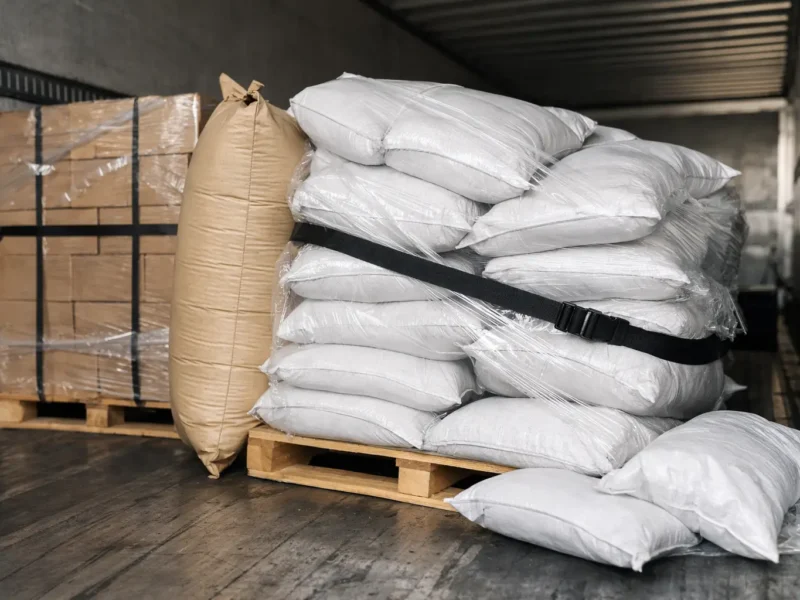
A pallet can leave the dock looking secure and arrive with crushed corners, torn stretch wrap, or product spread across the trailer floor. Understanding what causes pallet load shifting is the first step toward preventing damage claims, rejected deliveries, lost inventory, and avoidable cleanup time.
Load shifting is rarely caused by one dramatic failure. More often, it is the result of small weaknesses in pallet build, unitization, trailer loading, or void management that compound once freight is exposed to braking, turns, vibration, and repeated handling. The right corrective action depends on the product, pallet pattern, shipment mode, and available space around the load.
What Causes Pallet Load Shifting During Transport?
Palletized freight moves when the forces generated in transit exceed the friction and restraint holding it in place. Trucks brake hard, accelerate, turn, travel over uneven pavement, and encounter dock transitions. Railcars introduce long-duration vibration and impact forces. Intermodal shipments add multiple handoffs, longer transit times, and changing conditions across truck and rail segments.
A stable-looking pallet is not necessarily a stable transport unit. Freight must be restrained in two ways: the cartons, bags, drums, or components on the pallet must stay together, and the pallet itself must remain controlled within the trailer, container, or railcar.
Poor Pallet Build and Weight Distribution
An unstable pallet often starts at the packing line. Heavy cases placed high on the load raise the center of gravity, making the unit more likely to lean or topple during a turn. Uneven weight distribution can also overload one side of the pallet, causing deck boards to flex, cartons to crush, or the entire stack to settle.
Overhang creates another common problem. When cartons extend beyond the pallet edge, they are exposed to impact from adjacent freight and have less support underneath. Even minor compression at the bottom can loosen the stack above it. Underhang can be an issue as well when product does not adequately use the pallet footprint and has room to migrate within the unit.
The best pallet pattern depends on the product. Interlocking carton patterns can improve stability for some case sizes, but column stacking may provide better compression strength for others. There is no universal pattern that works for every shipment. The correct choice balances stacking strength, product dimensions, and expected transport forces.
Inadequate Stretch Wrap, Strapping, or Other Unitization
Stretch wrap is frequently treated as a finishing material when it is actually part of the load-securement system. Too little wrap, poor film tension, insufficient overlap, or failure to wrap the load to the pallet can allow product layers to slide independently. A pallet may look tightly wrapped at the dock but loosen after vibration and temperature changes during transit.
Wrapping only the cartons without properly capturing the pallet is a common mistake. The cartons can remain together while the full unit shifts off the pallet deck. Conversely, excessive film force can damage lightweight cartons, deform products, or create unnecessary material cost. The goal is enough containment force to hold the load under anticipated shipping conditions without crushing the product.
Strapping, corner protection, top frames, adhesive, anti-slip sheets, and bands can all improve unit stability when selected for the load. They do not replace sound pallet construction. A strap applied around a weak, poorly distributed stack may simply hold damaged product together until it fails later in the trip.
Pallet Damage or an Incorrect Pallet Choice
A pallet with broken deck boards, loose fasteners, cracked stringers, or inconsistent dimensions cannot provide a reliable base. Damaged pallets create uneven support points, which can concentrate weight beneath certain cartons and initiate collapse. Reused pallets can be cost-effective, but they need a consistent inspection process before entering the shipping line.
Pallet selection also matters. A pallet must be sized for the load and capable of supporting its weight through storage, forklift handling, and transport. Heavy industrial products may require stronger deck construction or a different pallet design than lightweight corrugated cases. Moisture exposure can reduce the performance of some wood pallets and corrugated slip materials, particularly in extended or humid shipments.
Unfilled Voids Between Pallets
Even well-unitized pallets can shift when there is open space in the trailer or container. Freight naturally moves toward available voids during braking, acceleration, or lateral motion. Once the first pallet moves, it can create additional space that allows neighboring loads to follow.
This is especially common when shipment quantities do not fully fill the vehicle, when mixed pallet sizes are loaded together, or when a trailer is partially unloaded and reloaded. Empty space at the rear, sides, or between pallet rows can turn normal transport movement into a damaging chain reaction.
Dunnage air bags are designed to fill appropriate voids and brace adjacent load faces, helping prevent lateral and longitudinal movement. Bag selection must match the void size, load weight, transport mode, and available contact area. An air bag is not intended to correct weak pallets, unstable stacks, or insufficiently wrapped product. It works best as part of a complete securement plan.
Transport Forces That Expose Weak Loads
The shipment mode affects how aggressively a load should be prepared. Over-the-road truckloads often experience strong braking and cornering forces, particularly in urban delivery routes or stop-and-go operations. Less-than-truckload shipments may be handled repeatedly, increasing the chance of forklift contact and load disturbance.
Rail shipments can subject cargo to longer periods of vibration and more pronounced impact events. Intermodal freight combines these risks, often across extended transit periods. A pallet configuration that performs acceptably on a short, dedicated truck route may not be sufficient for a rail or intermodal move.
Temperature and moisture can also affect performance. Stretch film can lose tension, carton strength can decline, and certain products may settle or change shape. For food, beverages, chemicals, building materials, and industrial components, load behavior should be evaluated under actual shipping conditions rather than only at the warehouse dock.
Loading Practices That Increase Shift Risk
Loading sequence matters. Heavy, stable freight should generally form the foundation of the load plan, while lighter or more damage-sensitive pallets need protection from contact and compression. Mixing dramatically different pallet heights can create unstable contact surfaces and leave gaps that are difficult to secure.
Forklift handling is another overlooked source of movement. Fast turns, abrupt stops, incorrect fork spacing, and partial fork entry can damage pallet bases or shift product before the trailer even leaves. Operators should place pallets squarely, minimize impact, and avoid pushing one load into another without confirming that the product can tolerate it.
Trailer condition should not be ignored. Wet or contaminated floors reduce friction. Broken floorboards, uneven surfaces, and damaged interior walls can limit securement options. Before loading, the trailer or container should be clean, dry, structurally sound, and suitable for the planned cargo configuration.
Practical Steps to Prevent Pallet Load Shifting
The most effective prevention program starts before product reaches the loading dock. Review the full load path: how the pallet is built, where it is stored, how it is handled, how it is positioned in the vehicle, and what restraints control remaining voids.
For recurring shipments, conduct a simple failure review whenever damage occurs. Look for the first point of movement rather than only the visible final damage. A crushed bottom carton may indicate excessive stack weight. A leaning pallet may indicate loose film or a high center of gravity. Product found several feet from its original position usually points to inadequate void control.
Use these operating checks to strengthen the process:
- Build loads with even weight distribution and keep heavier product lower on the pallet.
- Select pallets that match the load weight, footprint, handling method, and shipment duration.
- Apply stretch wrap or strapping with verified tension and secure the load to the pallet base.
- Eliminate or properly brace voids between pallet rows, sidewalls, and the trailer rear.
- Match dunnage bag size, level, and inflation method to the specific shipping application.
- Inspect pallets, trailer floors, and securement materials before loading.
Testing is worthwhile when a load is high value, unusually heavy, difficult to contain, or headed into rail or intermodal service. A small trial shipment can reveal whether film force, pallet pattern, bag placement, or load sequence needs adjustment before a larger program is exposed to risk.
Choose Securement for the Actual Load Condition
There is no benefit in using more securement material than the application requires, but under-specifying it can be far more expensive. The right approach considers product fragility, pallet strength, load weight, void dimensions, transport mode, and expected handling. A lightweight boxed shipment may need modest containment and void fill, while dense industrial freight may require higher-performance bracing and a more engineered loading pattern.
When the risk is unclear, technical guidance can prevent costly trial and error. Plastix USA helps shippers assess void size, cargo type, and shipping conditions so they can select dunnage air bags and inflation equipment that fit the job. The most reliable shipment is built from a controlled pallet, a sound loading plan, and securement chosen for the forces the cargo will actually face.