
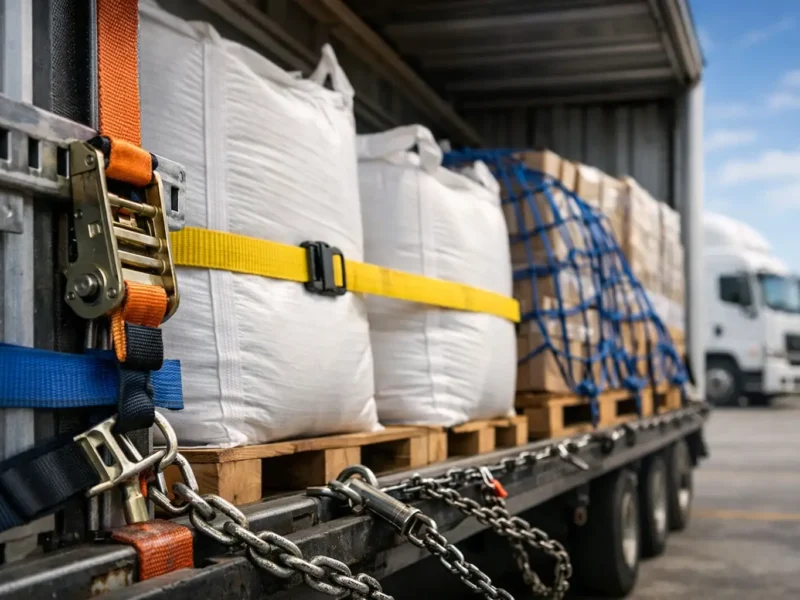
A shifted load does not usually start with a dramatic failure. It starts with a few inches of movement, a poorly matched restraint method, or a void that was never properly filled. By the time the trailer doors open, that small mistake can turn into crushed product, rejected deliveries, injury risk, and a claim that costs more than the securement would have in the first place. That is why choosing the best load restraint equipment is less about buying a product and more about matching the right tool to the actual transport condition.
For warehouse teams, packaging engineers, and freight coordinators, the real question is not which product is most popular. It is which restraint method performs consistently for your load profile, shipping mode, and handling environment. Truckload freight, railcar movement, and intermodal shipping do not create the same forces. A restraint system that works well for stable pallet loads may fall short for heavy, irregular, or high-void shipments.
What makes the best load restraint equipment?
The best load restraint equipment is equipment that controls movement without creating new problems in the process. That means it should be appropriate for the cargo weight, the available void space, the stacking pattern, the trailer or container type, and the length of transit. It should also be practical for crews to install correctly and fast enough to support throughput on the dock.
Performance matters first, but consistency matters just as much. If the restraint method only works when installed perfectly by your most experienced team member, it may not be the best fit operationally. Good equipment should support repeatable results across shifts, facilities, and shipment types.
Another factor is total cost. The lowest unit price does not always deliver the lowest shipping cost. Damage claims, labor time, rework, disposal, and customer dissatisfaction all affect the true cost of cargo securement.
Best load restraint equipment by application
There is no single product that fits every shipment. The right choice depends on how the load moves, where the voids are, and how much force the cargo can generate in transit.
Dunnage air bags for void filling and load stabilization
For many truck, rail, and intermodal applications, dunnage air bags are among the most effective solutions available. They are designed to fill empty space between loads and reduce lateral movement during transit. When the bag is properly sized and inflated to the correct pressure, it creates a firm buffer that helps stabilize the shipment.
This is especially useful for palletized products, boxed goods, paper rolls, drums, and many industrial shipments where side-to-side movement inside the trailer or container is the main issue. Dunnage air bags can also improve loading efficiency because they are fast to place and inflate compared with building custom bracing in every shipment.
That said, bag selection is not one-size-fits-all. The material construction, level rating, valve quality, and inflation method all influence performance. Kraft and woven polypropylene bags may suit different applications, and the shipping mode matters. A railcar environment generally places different demands on restraint than an over-the-road truck shipment. Choosing a bag based only on price is where many failures begin.
Strapping for unitizing and containment
Strapping is a strong option when the main goal is to hold products together as a single unit. It works well for pallet loads, bundled materials, and items that need vertical and horizontal containment during handling and transit. Polyester and steel strapping each have their place, depending on load weight and edge conditions.
The limitation is that strapping does not solve every movement issue by itself. It may keep products together on the pallet, but it does not automatically stop the entire load from shifting inside the trailer. In many operations, strapping works best as part of a broader securement plan rather than as the only line of defense.
Load bars and decking bars for trailer control
Load bars and decking bars are useful when freight needs to be segmented, braced, or supported inside a trailer. They can help prevent rearward movement and create separation between product groups. For LTL and mixed loads, they are often a practical choice.
Their trade-off is coverage. A bar controls movement at certain contact points, but it does not fill broad voids the way an air bag does. For uneven or fragile loads, point pressure can also be a concern if the load is not suited to bar contact.
Cargo nets and straps for irregular loads
Cargo nets and tie-down straps are often used when the load shape is irregular or when open-deck or specialized transport requires direct restraint. They are flexible and adaptable, which makes them useful for certain freight types.
Still, these products depend heavily on proper anchor points, tensioning, and operator technique. They can be highly effective, but they also leave more room for installation error than some void-fill systems.
Blocking and bracing for heavy-duty applications
Wood blocking, bracing, and other rigid securement methods remain relevant for certain heavy industrial shipments. Very dense, awkward, or non-uniform cargo may require fixed restraint methods that physically prevent movement.
The downside is labor and variability. Blocking and bracing can be time-consuming, material-intensive, and harder to standardize. If operations need speed and repeatability, a rigid method may not always be the most efficient answer unless the load truly demands it.
How to choose the right equipment for your freight
Start with load characteristics. Weight, shape, stack strength, packaging integrity, and center of gravity all affect what kind of restraint you need. Heavy loads with large voids create different risks than light palletized goods with minor spacing.
Next, look at transport mode. Truck shipments experience frequent vibration, braking, and cornering. Rail shipments often involve more severe impact and coupling forces. Intermodal adds longer transit cycles and multiple handling points. The best load restraint equipment for one mode may be underbuilt or unnecessarily costly for another.
Void size is another key factor. If there is open space between product rows or between the load and trailer wall, that gap usually needs to be managed directly. This is where dunnage air bags often outperform methods that only restrain from the outside. If there is no significant void but the pallet itself is unstable, strapping or stretch containment may be the better starting point.
You also need to think about loading speed and training. A securement plan that is technically sound but difficult to execute will eventually fail on the floor. The right solution should match the pace and skill level of the operation.
Why inflation tools and accessory quality matter
With dunnage air bags, the bag itself is only part of the system. Inflation tools, valves, and pressure control play a direct role in field performance. Underinflation can leave too much movement in the load. Overinflation can damage the bag, the product, or both.
A reliable inflator tool helps crews hit the correct fill level faster and more consistently. Valve quality matters for air retention, ease of use, and repeatability across shipments. These details may seem minor during purchasing, but they become major factors when you are loading high volume freight and need predictable results.
This is one reason experienced buyers focus on tested systems rather than isolated components. The restraint method needs to perform as a working setup, not as a collection of parts bought from different sources with different standards.
Common mistakes when evaluating restraint options
One common mistake is selecting equipment based only on package price. Another is assuming that if a product worked for one SKU, it will work for every shipment in the building. Freight conditions change, and securement methods should be reviewed with that in mind.
A third mistake is ignoring installation reality. If a product is difficult to position, inflate, tension, or inspect, usage quality can slip fast. Even good equipment performs poorly when the process around it is not practical.
Finally, some companies overlook supplier support. When a load pattern changes, or a new shipping lane introduces different forces, quick technical guidance can save time and reduce trial-and-error on the dock. For many shippers, that consultative support is part of what makes a restraint solution truly valuable.
The strongest choice is usually application-specific
In many freight environments, dunnage air bags rank among the best options because they address one of the most common causes of cargo damage – unfilled voids that allow movement in transit. They are efficient, adaptable, and cost-effective when properly matched to the shipment. But they are not automatically the answer for every load.
The strongest securement program usually combines methods where needed. A pallet may need strapping to stay unitized, while air bags manage side voids in the trailer. A heavy industrial load may require rigid blocking in one direction and cushioning in another. That is how experienced operations think about cargo protection: not as a single product decision, but as a system built around risk.
For shippers that move valuable freight every day, the best equipment is the equipment that performs consistently, installs efficiently, and fits the real-world conditions of the load. If that selection process is handled carefully, damage goes down, claims drop, and the loading dock stops paying for preventable movement after the trailer has already left.