
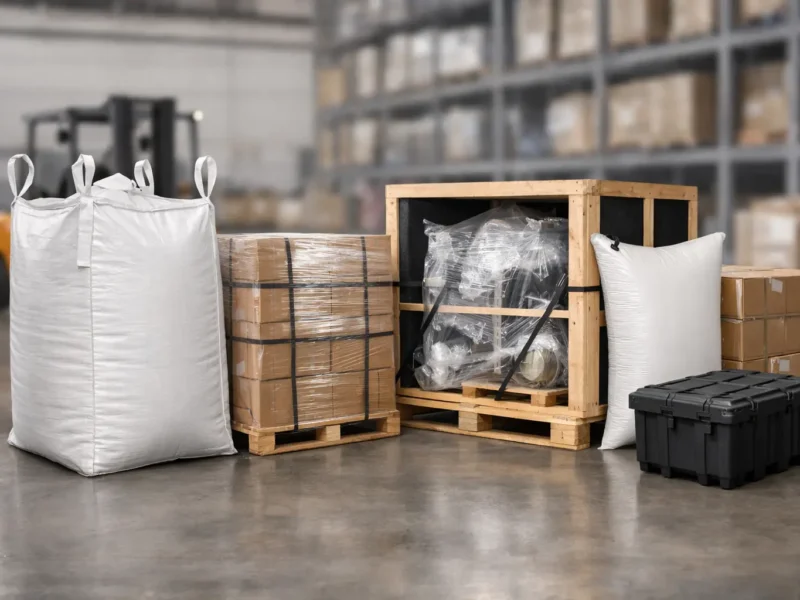
A damaged load rarely starts with a failed pallet. More often, it starts with unfilled space, mismatched securement, or packaging that was selected for the product but not for the trip. The best transit packaging for industrial freight accounts for the cargo, the voids around it, the transport mode, and the forces the load will face from pickup through delivery.
For warehouse and logistics teams, the goal is not to add material wherever possible. It is to build a load that stays stable without creating avoidable labor, freight, disposal, or damage costs. That requires a practical combination of unitization, blocking and bracing, and void-fill protection selected for the shipment at hand.
What Defines the Best Transit Packaging for Industrial Freight
Industrial freight packaging must do more than protect an individual carton or pallet. It has to control movement across an entire trailer, railcar, or intermodal container. A load can be properly stretch wrapped and still shift several inches during braking, cornering, rail impact, or repeated vibration.
The right system starts with the shipping environment. Over-the-road truckloads face frequent acceleration and braking. Rail shipments can experience higher impact forces during coupling and switching. Intermodal freight adds handling events, longer transit times, and changes in temperature and humidity. Packaging that performs well in a short, dedicated truck run may not be appropriate for a multi-stop rail or container shipment.
The product itself matters just as much. Dense machinery components, bagged materials, drums, palletized cases, paper rolls, lumber, and appliance loads each create different securement challenges. Weight distribution, pallet condition, stack height, friction between load surfaces, and void size should all be evaluated before a packaging specification is set.
Start With Load Stability, Not Packaging Material
A common purchasing mistake is to choose a product category first – such as stretch film, foam, or airbags – and then try to make it fit every shipment. Start instead with how and where the cargo can move.
Look for longitudinal voids between pallets, lateral space between the load and trailer wall, gaps between stacked units, and open areas at the rear of the shipment. Also identify whether the load can slide, tip, roll, collapse, or separate. These are different failure modes and may require different controls.
Stretch wrap and banding help unitize goods on a pallet. Edge protection can prevent straps from damaging cartons and improve load containment. Pallet caps and top frames can support stacking where the product allows it. None of these measures, however, automatically prevent pallets from moving into open trailer space. That is where blocking, bracing, or properly sized dunnage bags become necessary.
A good freight packaging plan uses each component for its intended purpose. Stretch wrap is not a substitute for trailer securement. A dunnage air bag is not a substitute for a damaged pallet or weak carton. Cargo protection works when the system addresses the actual source of movement.
When Dunnage Air Bags Are the Right Choice
Dunnage air bags are designed to fill voids and stabilize freight by applying controlled pressure between load units or between cargo and a suitable trailer wall. They are often an efficient choice for palletized goods, bundled materials, drums, and many industrial loads moving by truck, rail, or intermodal transport.
Their main advantage is speed. A deflated bag takes little storage space, can be positioned after loading, and is inflated with the appropriate tool. Compared with loose wood blocking, airbags can reduce setup time and material handling while providing consistent void fill when correctly selected and installed.
Bag selection depends on the load and the route. Kraft dunnage bags are widely used for dry van and rail applications where paper-based outer layers are suitable. PP woven dunnage bags offer strong resistance to moisture and abrasion, making them a practical option for demanding environments and repeated handling. PE airbags can be appropriate for lighter-duty applications or specific void-fill requirements.
The bag must match the void. An undersized bag may overexpand before it provides sufficient contact. An oversized bag can fold, pinch, or inflate unevenly. In general, the bag should fill the available gap without being forced into a position where sharp edges, exposed fasteners, or unstable cargo can puncture it.
Inflation Equipment and Valve Quality Matter
A high-quality bag still depends on correct inflation. The valve and inflator should allow the operator to reach the specified pressure quickly and consistently. Improvised inflation methods can slow loading, cause leakage, or leave bags underinflated.
Train loading teams to follow the bag manufacturer’s pressure guidance and placement instructions. More air is not automatically better. Excess pressure can damage weaker cartons, distort a load, or create a bag failure risk. The objective is firm, stable contact across suitable load surfaces.
Blocking and Bracing for Heavy or Irregular Freight
Some loads require more than void fill. Heavy machinery, metal components, large coils, irregular equipment, and freight with a high center of gravity may need fixed blocking and bracing to resist movement. Depending on the transport mode and equipment, this can include lumber, braces, chocks, deck boards, straps, or other engineered securement methods.
Blocking is particularly useful when cargo has concentrated weight or when a gap is too large for an air bag to perform effectively. Bracing can limit forward, rearward, or lateral movement when the load cannot rely on pallet friction alone. For certain shipments, dunnage bags and blocking work together: fixed materials establish a controlled barrier, while an air bag fills smaller remaining voids and maintains contact.
There are trade-offs. Wood blocking can be durable and familiar to crews, but it adds labor, storage requirements, debris, and disposal costs. It may also be unsuitable for shipments with cleanliness requirements or for operations trying to reduce single-use materials. Dunnage systems can improve loading speed, but they require correct sizing, compatible load surfaces, and trained operators.
Match Protection to the Transport Mode
The best packaging design changes when the route changes. A local truck shipment of stable, fully palletized product may need basic unitization and minimal void fill. A railcar shipment carrying dense, high-value material needs a more conservative approach because impact forces and transit duration are generally greater.
For truck freight, evaluate whether the trailer will be full, partially loaded, or handled through multiple stops. Partial loads often have more open space and more opportunities for pallets to shift. For rail, account for the possibility of stronger longitudinal forces and use materials rated for the application. For intermodal containers, consider longer transit, humidity exposure, and the need for cargo to remain secure through multiple transfers.
Do not assume the carrier’s equipment solves the problem. Trailer walls, load bars, and straps may be helpful, but their condition, placement, and availability can vary. The shipper should define a repeatable securement standard for each major load profile rather than relying on last-minute decisions at the dock.
Build a Repeatable Packaging Specification
Once a load configuration works, document it. A simple specification should identify pallet pattern, maximum stack height, approved packaging materials, dunnage bag type and size, inflation requirements, placement locations, and any blocking or bracing needed. Include photos of a correctly loaded shipment when possible.
This reduces variation between shifts, facilities, and contract warehouses. It also gives procurement teams a clearer basis for ordering the correct materials instead of purchasing by lowest unit price alone. A less expensive bag or wrap that produces inconsistent results can cost far more in claims, rework, rejected deliveries, and customer dissatisfaction.
Quality consistency is especially important for airbags. Material construction, valve performance, and production testing affect how reliably a bag performs under pressure. Buyers should ask suppliers about testing practices, application ratings, raw material standards, and available guidance for their specific freight conditions.
Test Before You Standardize
A controlled shipping trial is often the fastest way to confirm a packaging choice. Test the proposed configuration on representative product, pallet, and equipment conditions. Inspect the load at delivery for movement, crushed cartons, punctures, shifted pallets, and signs that the bag was improperly sized or placed.
Use damage data to refine the specification. If shipments arrive stable but loading takes too long, look for a faster inflation method or a better bag size. If bags show abrasion, address sharp contact points or switch to a more suitable construction. If the load shifts despite intact packaging, the problem may be the pallet pattern or the need for additional blocking rather than the bag itself.
For operations managing varied freight profiles, experienced product guidance can prevent costly trial and error. Plastix USA can help evaluate load weight, void dimensions, transport mode, and bag format so the selected securement method fits the application.
The most effective next step is to review one recurring damage risk or difficult load pattern at your dock. Measure the voids, identify the direction of movement, and specify protection around that real condition. A packaging system built on those facts will protect cargo better than a one-size-fits-all material choice.