
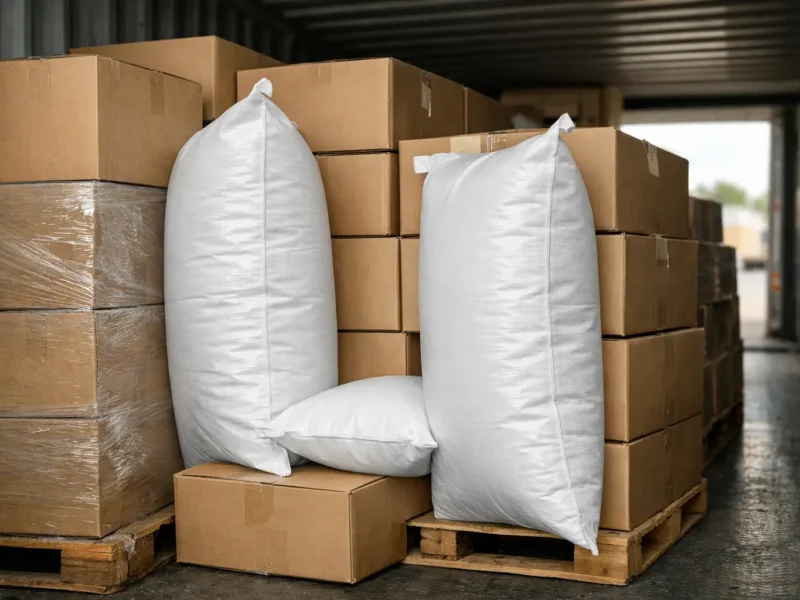
A truck can leave the dock with tight-looking pallets and still arrive with crushed cartons, scuffed product, or a rejected load. The problem is often the open space between units of cargo. Void fill bags for shipping are designed to occupy that space, helping prevent pallets and freight from shifting as the vehicle brakes, turns, vibrates, and encounters uneven road or rail conditions.
For industrial shippers, the goal is not simply to put something between pallets. The goal is to select a dunnage solution that matches the load, the void, and the transportation environment. A correctly specified air bag can reduce damage exposure and improve load stability. A poorly selected bag, improper inflation, or weak loading pattern can leave the same risk in place.
What Void Fill Bags for Shipping Do
Void fill bags for shipping, often called dunnage air bags or dunnage bags, are inflatable barriers placed in open spaces between cargo units. Once inflated, they apply controlled pressure to adjacent loads and help keep them in position throughout transit.
They are commonly used in truck trailers, railcars, ocean containers, and intermodal shipments. Typical applications include palletized consumer goods, paper rolls, bagged materials, drums, industrial components, building products, and boxed machinery. The bag fills a lateral void, but it is part of a complete cargo-securement plan – not a replacement for sound palletizing, proper weight distribution, stretch wrap, strapping, blocking, or bracing where those methods are needed.
A dunnage bag works best when the cargo faces it contacts are stable and capable of handling the bag’s pressure. If pallets are leaning, cartons are crushed, or unit loads are already loose, inflating a bag against them can make the situation worse. The load must be prepared to accept the pressure before the bag is installed.
Start With the Void, Not the Bag
The most common purchasing mistake is choosing an air bag based only on a familiar size or lowest unit cost. Start by measuring the actual void between the load faces after the trailer, railcar, or container has been loaded. Bag width and height must cover the space effectively without being stretched beyond the manufacturer’s intended application.
A bag that is too narrow may not make sufficient contact with the cargo. A bag that is too large can fold, pinch, or inflate unevenly. Both conditions reduce performance. The opening also matters. A long, irregular gap may require a different bag configuration than a uniform space between two full pallet rows.
Consider the load’s dimensions, surface condition, and rigidity at the same time. Smooth, stable pallet faces provide a better bearing surface than uneven cartons, exposed pails, or loads with gaps. When load faces are irregular, a corrugated buffer or other appropriate protection may help distribute pressure. The right approach depends on the cargo and should be evaluated before shipment, not after a damage claim.
Account for Movement in Every Direction
Dunnage airbags are frequently used to control side-to-side movement, but freight can move forward and backward as well. Sudden braking, acceleration, grade changes, and rail impacts create forces that a lateral void fill bag alone may not address.
Review the full loading pattern. Identify open spaces, the direction of likely movement, and whether the product is restrained at the nose, rear, sides, and floor. Freight should be loaded with balanced weight and stable contact points. A dunnage bag supports a disciplined loading process; it cannot correct a trailer loaded with inadequate restraint or major gaps in multiple directions.
Select the Right Bag Construction and Strength
Dunnage bags are available in several constructions, including polyethylene, kraft paper, and polypropylene woven formats. The correct choice depends on the shipping mode, cargo weight, expected forces, moisture exposure, and required performance level.
PE airbags are a practical option for many truck and container applications. They are lightweight and suited to operations that need efficient handling and straightforward installation. Kraft dunnage bags combine an inner liner with multiple paper plies and are widely used for general freight applications. PP woven dunnage bags are built for demanding environments where high strength, durability, and resistance to handling conditions are priorities.
Strength ratings should be selected for the application, not assumed. A bag used in a lightly loaded over-the-road trailer faces different conditions than one securing dense product in a railcar. Rail shipments can experience higher impact forces, while intermodal freight may see repeated handling and longer transit cycles. Review the bag’s stated performance classification and confirm that it is appropriate for the transportation channel.
Material consistency matters as much as the nominal rating. Industrial buyers need bags that perform predictably from shipment to shipment. Quality control, liner integrity, valve reliability, and post-production testing all affect whether a dunnage bag inflates correctly and holds pressure when it is needed.
Inflation Equipment Is Part of the System
The bag is only one part of the application. The valve and inflator tool determine how quickly, accurately, and safely the bag can be filled. A compatible inflation system helps crews reach the correct pressure without wasting time on the dock or entering an unsafe position between loads.
Use the inflation pressure recommended for the specific bag and application. Overinflation can damage the bag, place excessive pressure on freight, or create a false sense of security. Underinflation may allow the load to settle and move during transit. Pressure should be verified as part of the loading procedure, especially for heavier loads and higher-risk transportation modes.
Train loading personnel on bag placement, valve use, inflation limits, and inspection. The most reliable product can still fail in service if it is installed over a sharp edge, positioned against an unstable load, or inflated before the cargo is properly squared. Standard work instructions make a measurable difference in repeatability across shifts and facilities.
Avoid These Common Loading Failures
Many damage issues involving void fill bags come back to installation rather than the bag itself. Watch for four recurring problems:
- Placing bags against weak, damaged, or uneven load faces
- Using a bag to fill a void that is too large for its designed range
- Inflating without checking the specified pressure and valve connection
- Treating the bag as the only restraint in a load that needs blocking, bracing, or securement in other directions
Inspection should happen before the doors are closed. Confirm the bag is centered in the void, not caught under a pallet or rubbing against sharp edges. Check that the load remains square and that the valve is accessible only as needed, then protected from accidental damage. If the bag or the cargo face does not look right at the dock, it will not improve after hundreds of miles of transit.
Build Void Fill Into a Repeatable Shipping Standard
The best results come from making void-fill selection a standard part of packaging and loading design. Record the trailer or railcar type, pallet configuration, product weight, void dimensions, bag type, target pressure, and any supplemental securement used. This gives warehouse teams a repeatable method instead of asking each shift to make a judgment call under time pressure.
For operations with multiple SKUs or changing freight patterns, test the proposed configuration before broad rollout. A sample shipment or controlled load evaluation can reveal issues with bag size, pallet stability, valve access, or loading speed. Procurement should also consider supply consistency, available technical support, and compatibility with existing inflators rather than comparing bags only by purchase price.
Plastix USA helps shippers evaluate dunnage bag construction, size, valve options, and inflation tools based on the actual freight application. The right recommendation begins with clear information about the product, load weight, void size, and transportation mode.
A properly filled void is a small part of the load, but it can protect the entire shipment. When the bag, cargo, and loading method are matched correctly, crews gain a faster, more consistent way to reduce movement before the trailer or railcar leaves the facility.