
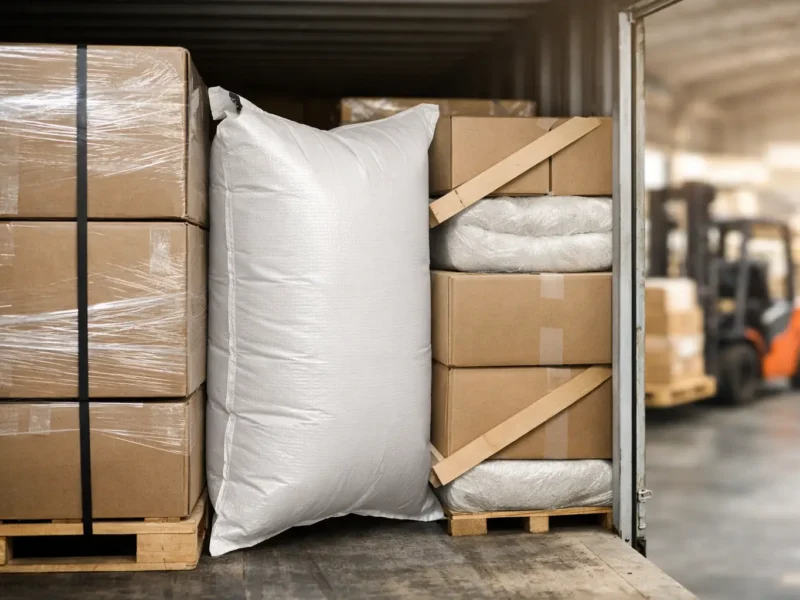
A load can be correctly palletized, wrapped, and staged, then still arrive damaged because empty space inside the trailer or railcar allowed it to move. That is the practical answer to when should you use dunnage: use it whenever voids between cargo, or between cargo and a vehicle wall, can let freight shift during transit.
Dunnage is not a substitute for proper loading, blocking, bracing, or securement. It is a cargo-control tool that fills open space and applies controlled pressure to help keep a stable load stable. Used correctly, dunnage air bags can reduce product damage, rejected deliveries, claims activity, and the labor required to rework compromised shipments.
When should you use dunnage air bags?
Use dunnage air bags when freight is loaded in rows or bays with a gap that cannot be eliminated through load planning. Common examples include palletized consumer goods, paper products, beverage loads, bagged materials, appliances, industrial components, and unitized building products. If a forklift operator can see a meaningful open channel between two load faces after loading, that space deserves attention.
Truck trailers, railcars, and intermodal containers all experience acceleration, braking, vibration, cornering, coupling forces, and changes in road or track conditions. Even a relatively small gap can become a larger problem when a load repeatedly moves into it. A dunnage bag fills the void, helping distribute pressure across the load faces and limiting lateral or longitudinal movement.
The best candidates are loads with firm, reasonably uniform contact surfaces. Palletized cartons, flat-sided drums in stable configurations, and bundles with adequate load strength often work well. The bag must contact cargo that can tolerate the intended restraint pressure. It should not be used against weak packaging, sharp edges, protruding hardware, or unstable stacks without appropriate protection and a sound securement plan.
The situations where dunnage provides the most value
Dunnage is especially useful when cargo damage would be expensive or disruptive. That may mean high-value manufactured goods, customer-ready retail packaging, components needed for production, or products that become unsellable after crushing, scuffing, or contamination. The cost of an air bag is usually minor compared with a refused load, a claim investigation, replacement freight, and lost customer confidence.
It is also a practical choice when loading patterns create unavoidable voids. Mixed pallet footprints, irregular shipment quantities, partial loads, and multi-stop freight often leave spaces that cannot be filled with another pallet. Rather than accepting movement as unavoidable, the shipper can select a bag sized for the actual void and transport mode.
Rail and intermodal shipments deserve particular attention because cargo can be exposed to longer transit times and higher cumulative forces. Railcar handling and coupling can place significant stress on load securement. In these applications, bag construction, performance level, valve reliability, and correct inflation are not details to overlook. The dunnage system needs to match the operating conditions, not just fill the space.
Dunnage is useful before movement begins, not after a problem occurs
A common mistake is treating dunnage as a reactive measure after a previous damage claim. It works best as part of the loading standard for a repeatable lane, product line, or trailer configuration. Once a warehouse team identifies recurring void locations, it can standardize bag size, inflation equipment, placement instructions, and inspection points.
That consistency improves loading speed as well as cargo protection. Operators are not forced to improvise with scrap material, loose pallets, or makeshift fillers that may not perform predictably. A defined dunnage process gives the team a clear answer before the trailer doors close.
When dunnage is not the right answer
Dunnage air bags are highly effective for filling voids, but they are not designed to correct every loading problem. They should not be relied on to restrain freight that is already unstable, poorly stacked, inadequately unitized, or improperly blocked and braced. If pallets are leaning, cartons are crushed, or the load has no stable face for bag contact, correct those conditions first.
They are also not the right tool for securing cargo directly to the floor or preventing vertical movement. Tie-downs, load bars, decking, blocking, bracing, and other approved securement methods may be required depending on the product and shipment. A bag controls movement by occupying space and exerting controlled pressure. It does not replace the securement methods needed for the specific commodity and vehicle.
The same caution applies to voids that are too large for the selected bag. An undersized bag may overexpand, contact the load poorly, or fail to provide consistent support. Conversely, an oversized bag may be difficult to position and inflate correctly. Measure the gap after the freight is loaded, then select a bag width and length that can work within the manufacturer’s stated range.
How to choose the right dunnage configuration
Selecting a dunnage bag starts with four factors: the size of the void, the weight and type of cargo, the strength of the load faces, and the transportation mode. A light truckload of uniform palletized goods does not require the same solution as a heavily loaded railcar or an intermodal container carrying dense industrial products.
The bag material matters as well. Kraft dunnage bags are widely used for many general freight applications and provide dependable performance in appropriate conditions. PP woven bags are suited to demanding applications where high strength and durability are needed. PE air bags can be a useful option for lighter-duty or particular packaging requirements. The right choice depends on the shipment, not a one-size-fits-all preference.
Consider the valve and inflator method as part of the system. A quality bag can still underperform if it is inflated with incompatible equipment, inflated too slowly for the operation, or inflated beyond the recommended working pressure. Teams need equipment that supports accurate, repeatable inflation and allows operators to work efficiently at the dock.
For recurring applications, document the configuration. Record the product, pallet pattern, void dimensions, bag type, placement location, and inflation procedure. This gives warehouse supervisors and packaging engineers a repeatable standard, while providing procurement teams a clearer basis for ordering the correct materials.
Proper placement and inflation make the difference
Place the bag centered in the void, with the intended load-contact surfaces aligned as evenly as possible. The bag should not be twisted, folded into a narrow channel, or positioned where it can rub against exposed nails, metal strapping, pallet splinters, or sharp corners. Use edge protection or other safeguards where the cargo configuration creates abrasion risk.
Inflate the bag only to the recommended pressure for its rating and application. More pressure is not automatically better. Overinflation can stress the bag and the freight, while underinflation may leave enough movement for cargo to gain momentum. The goal is firm contact that stabilizes the load without crushing cartons or overloading the packaging.
Before releasing the shipment, inspect the full load. Confirm that the cargo is stable, the bag is properly seated, the valve is secure, and other required securement methods are in place. Door-side freight requires added care. Do not position cargo or dunnage in a way that creates a door-opening hazard if the load shifts during transit.
Build dunnage into the shipping decision
The most effective shippers do not treat cargo protection as an item to buy after damage happens. They evaluate voids during packaging design, pallet configuration, trailer loading, and carrier planning. That approach helps identify where air bags make sense and where another method should be used instead.
Plastix USA can help shippers evaluate bag format, size, valve options, and inflation tools based on the actual load condition. Providing the cargo type, shipping mode, pallet pattern, approximate weight, and measured void size leads to a more reliable recommendation than selecting by price alone.
When a shipment has valuable freight, repeatable gaps, or exposure to demanding road, rail, or intermodal conditions, dunnage is a practical line of defense. Measure the void, assess the load strength, choose the bag for the application, and give the loading team a procedure they can follow every time.