
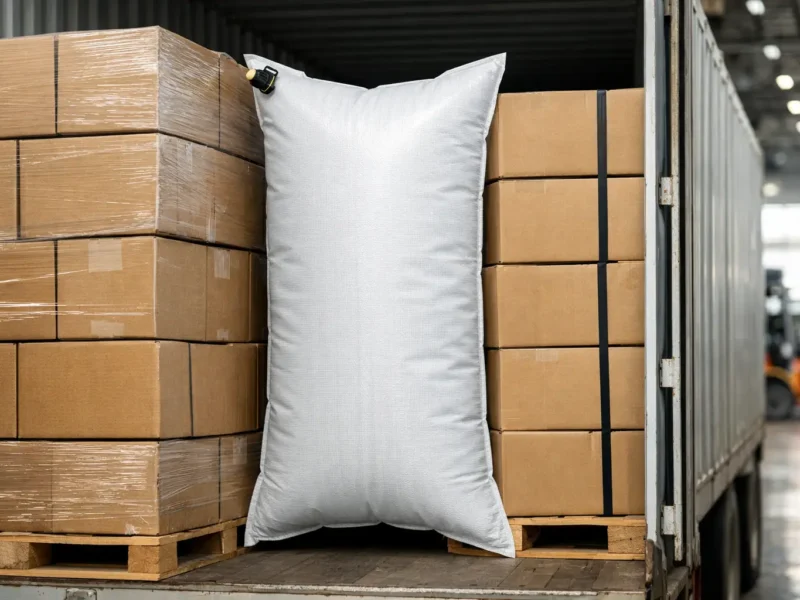
A dunnage bag failure is rarely just a packaging problem. It can mean crushed product, a rejected shipment, a customer claim, delayed unloading, and a warehouse team trying to explain why a load shifted in transit. OEM dunnage bag manufacturing is where those risks are addressed before the bag reaches a trailer, railcar, or intermodal container.
For brands, distributors, and industrial shippers, the real requirement is not simply a bag with a private label. It is consistent construction, verified performance, and a supplier that understands how the finished product will be used under actual freight conditions. The right OEM program protects the reputation printed on the bag as much as it protects the cargo behind it.
What OEM Dunnage Bag Manufacturing Must Deliver
OEM manufacturing allows a company to sell dunnage airbags under its own name while relying on an experienced manufacturer for material conversion, production control, testing, and supply support. It can include custom bag sizes, pressure ratings, printing, packaging configurations, valve selections, and inflator compatibility.
That flexibility matters because cargo securement is application-specific. A distributor shipping dense palletized goods in a dry van faces different void-fill demands than a producer securing rolls, drums, or bulk materials in a railcar. A standard item may be the correct answer for many loads, but a custom specification becomes valuable when customers require a particular size range, branded packaging, or a performance level aligned with their freight network.
An OEM supplier should begin with the application, not the artwork. Load weight, void size, trailer or railcar conditions, transport mode, expected handling, and inflation method all influence the proper bag design. Branding can be added once the bag construction is proven for its intended use.
Materials Determine More Than the Bag’s Appearance
Dunnage bags are often grouped by outer material – kraft paper, PP woven fabric, or polyethylene – but the outer layer is only part of the specification. The liner, adhesive or bonding process, valve assembly, seams, and quality of material inputs all affect performance.
Kraft dunnage bags are widely used for many truck, rail, and intermodal applications. Their multi-layer paper construction provides a familiar, economical solution for filling voids between stable loads. PP woven dunnage bags offer a durable outer construction suited to demanding freight environments where abrasion resistance and higher-strength performance are required. PE airbags are often selected where moisture resistance, lighter handling, or specific shipping requirements make plastic construction the better fit.
There is no single material that is best for every shipment. A lower-cost bag can be appropriate when loads are light, voids are manageable, and transit conditions are controlled. It can be the wrong choice when high load forces, long rail movements, or challenging intermodal handling call for stronger construction. The cost of the bag should be evaluated against the cost of cargo damage, claims processing, labor disruption, and replacement freight.
For OEM buyers, material sourcing also has direct implications for consistency. When resin, paper, woven fabric, and valve components vary without control, the finished product can vary as well. A dependable manufacturing program uses defined material standards and maintains traceability throughout production. Plastix USA supports domestic-style sourcing standards that exclude China-sourced raw materials, helping OEM customers maintain a consistent product position for their own markets.
The Liner and Valve Are Critical Components
The internal liner holds inflation pressure. A bag may look acceptable from the outside yet fail to perform if its liner has weak areas, poor seals, or inconsistent film properties. Liner integrity should be verified through controlled testing, not assumed from a visual inspection.
The valve is equally important because it affects inflation speed, air retention, and operator usability. A valve must work reliably with the selected inflator tool and support the pressures required by the bag’s application. An OEM program should confirm valve style, tool compatibility, and operating procedures before a large production run begins.
Quality Control Is the Difference Between a Product and a Promise
A dunnage bag is expected to perform when a load begins moving, not when it is sitting uninflated on a warehouse floor. That is why meaningful quality control includes both in-process checks and post-production testing.
During production, manufacturers should monitor dimensions, material weight or construction, seals, valve installation, printing quality, and packaging accuracy. These checks catch preventable issues before they become finished inventory. Post-production testing provides another layer of assurance by evaluating air retention, pressure performance, and the integrity of the completed bag.
Testing should reflect the bag type and intended performance category. A product designed for modest truckload void fill should not be represented as equivalent to a bag specified for demanding railcar service. Clear product documentation, defined performance expectations, and disciplined lot control protect both the OEM brand and the end user.
This is also where low-price comparisons can become misleading. Two bags with similar dimensions may have very different material construction, liner quality, valve performance, and testing discipline. Procurement teams should compare the full specification rather than treating all bags of the same size as interchangeable.
Building an OEM Program Around the End User
The strongest OEM programs are designed backward from the end user’s operating conditions. That means understanding how the customer loads equipment, the typical voids they encounter, how quickly crews need to inflate bags, and whether the freight moves by truck, rail, or intermodal service.
A practical starting point is to define the core assortment. Many OEM brands benefit from a focused range of proven bag sizes and formats rather than an oversized catalog that creates inventory complexity. From there, the program can add specialized configurations for large voids, heavy cargo, rail use, or moisture-sensitive applications.
Packaging deserves the same attention. Carton counts, pallet patterns, warehouse storage limits, labeling requirements, and reorder frequency affect the total cost of supplying a product. A bag that performs well but creates unnecessary handling or storage problems can reduce the value of the program. The best arrangement balances freight protection with purchasing efficiency and warehouse practicality.
Private-label printing should be clear and functional. It can include the brand name, bag size, instructions, warnings, lot identification, and inflation guidance as appropriate. Overdesigned graphics are less useful than readable information that helps a dock team select and use the product correctly.
Samples and Validation Reduce Avoidable Risk
Before committing to a full OEM order, buyers should review samples and validate the configuration against representative load conditions. This is especially important when changing from another supplier, introducing a new bag material, or serving a new transportation segment.
A sample review can confirm physical dimensions, packaging, print quality, valve operation, and inflator fit. Where possible, controlled load trials provide more useful evidence than assumptions based on a specification sheet. They also help identify training needs, such as proper placement, inflation pressure, or the number of bags needed for a specific void.
Dunnage bags are not intended to compensate for poor loading practices. They work as part of a securement plan that includes stable pallets, proper load distribution, appropriate blocking and bracing where needed, and correct bag placement. An OEM supplier with freight experience should be willing to discuss those conditions directly.
Supply Reliability Protects Your Customer Relationships
An OEM label makes the brand owner responsible in the customer’s eyes, regardless of where the product was manufactured. If inventory is late, cartons are mislabeled, or bag performance is inconsistent, the customer calls the brand on the box.
For that reason, manufacturing capacity and response speed are operational requirements, not secondary purchasing considerations. Buyers should establish realistic lead times, inventory plans, quality expectations, and communication procedures before demand increases. This is particularly important for companies with seasonal shipping peaks, nationwide distribution, or customers that rely on a standard dunnage specification across multiple facilities.
The right manufacturing relationship also makes it easier to adapt. A customer may need a different bag size after changing pallet patterns, a higher-performance option for rail shipments, or compatible valves and inflators for a new warehouse. Fast technical response keeps these changes from turning into extended supply disruptions.
Selecting the Right OEM Manufacturing Partner
An OEM manufacturer should be evaluated on more than quoted unit price. Look for proven experience with dunnage bag construction, defined material standards, documented testing practices, responsive technical support, and the ability to supply the formats your customers actually need. Ask how the manufacturer manages production consistency, how it verifies valve and liner performance, and what support is available during product selection and field implementation.
It also helps to confirm whether the supplier can support the complete system. Dunnage bags depend on compatible valves, inflator tools, and practical operating guidance. Supplying only the bag can leave the end user with an incomplete solution and create unnecessary service issues for the OEM brand.
A well-built OEM dunnage program gives customers a product they can specify with confidence and warehouse teams a tool they can use without guesswork. When cargo protection, quality control, and supply discipline are built into the manufacturing process, the name on the bag becomes a dependable part of the shipment, not another source of risk.