
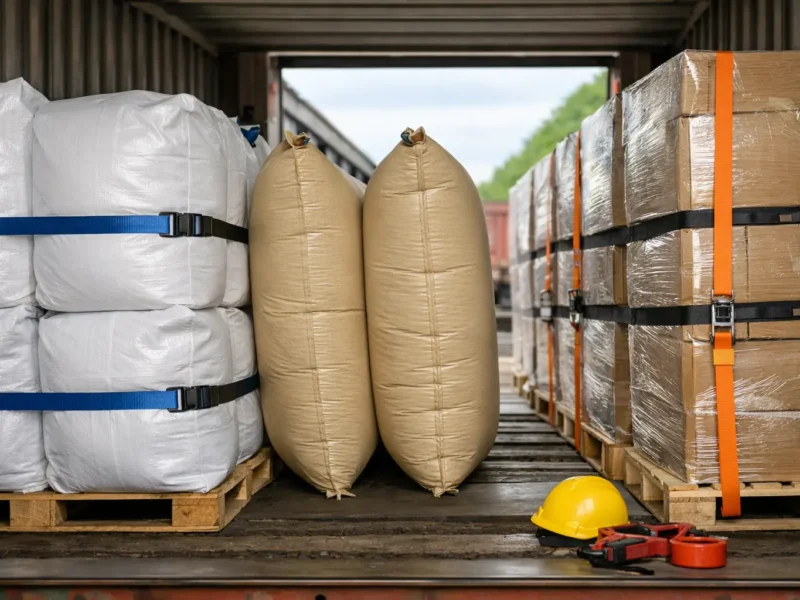
A railcar can experience draft forces, coupling impacts, vibration, and long transit dwell time before it reaches the consignee. That is why a rail shipping damage prevention guide must start with load movement, not just packaging. Cartons, pallets, drums, coils, and industrial components can be in good condition when loaded yet arrive damaged because an open void allowed the load to shift.
Rail damage is rarely caused by one obvious mistake. More often, it results from a chain of small decisions: uneven pallet construction, inadequate bracing, the wrong dunnage bag level, incomplete inflation, or a final inspection skipped to meet a pickup deadline. Preventing claims requires a repeatable loading process that accounts for the cargo, the railcar, and the forces the shipment will encounter.
Start With the Railcar and the Load Pattern
The correct securement method depends on the railcar type, interior dimensions, door configuration, and condition of the car. Before loading, inspect the floor, walls, doors, anchor points, and any installed load-restraint system. A damaged floorboard, exposed fastener, or missing fixture can compromise both cargo protection and the effectiveness of a restraint plan.
Then evaluate the cargo as a system rather than as individual units. Weight distribution matters. Heavy product concentrated at one end of a railcar can create handling concerns and increase the chance that lighter product migrates into open space. Load heavier, more stable units first where the approved loading plan calls for them, and keep the center of gravity as controlled as possible.
Palletized freight should have consistent footprints, stable stacking, and sufficient unit strength to tolerate compression. If one pallet is shorter, weaker, or loosely wrapped, it can become the first point of failure when adjacent freight moves. Stretch wrap helps contain a pallet load, but it is not a substitute for railcar securement.
For irregular, round, or high-value industrial cargo, the loading plan may require blocking, bracing, cradles, or other engineered restraints in addition to void fill. The right approach depends on the cargo’s weight, shape, surface, and sensitivity to impact. Dunnage airbags are highly effective for filling lateral voids and stabilizing many unitized loads, but they are not designed to replace structural restraint where structural restraint is required.
Identify and Eliminate Void Space
Open space is where freight damage starts. Even a properly stacked load can shift when it has room to build momentum. Rail movement may be gradual at first, but repeated vibration and intermittent impacts can widen gaps, loosen packaging, and turn a minor shift into a rejected shipment.
Measure the voids between load rows, between cargo and railcar walls, and near door areas. Do not estimate when the load condition is unusual or the shipment is high value. Void width affects the dunnage bag size and configuration needed to create reliable pressure against the load.
A dunnage air bag works by occupying the void and applying controlled pressure to opposing load surfaces. When properly selected and inflated, it helps prevent lateral movement without requiring crews to build extensive wood bracing for every application. The bag must fit the void, contact stable load surfaces, and be rated for the transportation environment.
Avoid using a bag that is too small for the gap or attempting to make one bag solve an oversized void. An undersized bag may overexpand, lose effective contact, or fail to distribute pressure properly. Conversely, a bag that is too large may be difficult to position and can create an inconsistent contact area. For wide voids, multiple bags, corrugated fillers, or a different restraint strategy may be appropriate.
Match Bag Construction to Rail Service
Rail shipments can involve significant force, especially when freight moves through switching yards or travels as part of an intermodal route. Bag construction and performance level should reflect that exposure. Kraft, PP woven, and PE dunnage bags each have applications, but they do not offer identical puncture resistance, pressure capability, or handling characteristics.
PP woven dunnage bags are commonly selected when shippers need a durable, high-performance solution for demanding load conditions. Kraft options can be suitable for many standard applications when the load and void size are appropriate. PE air bags are often useful for lighter-duty freight or applications where moisture resistance and easy handling are primary considerations. The proper selection should be based on cargo weight, void dimensions, surface conditions, transport mode, and the level of force expected.
The inflation valve and tool matter as much as the bag itself. A dependable valve supports controlled filling and helps prevent air loss during transit. Use an inflator that is compatible with the valve system and provides the pressure control required by the bag manufacturer’s specifications. Improvised inflation methods create unnecessary risk and make it difficult to verify that every bag is properly filled.
Follow a Controlled Loading Sequence
Loading crews need a clear sequence, particularly when different product sizes share one railcar. Begin with the approved load plan and establish where each product group will sit before the first pallet enters the car. Rehandling freight after partial loading wastes time and can leave crews trying to force a securement solution into a space that was not planned for it.
As each row is loaded, check alignment and contact points. Pallets should sit squarely, with no leaning stacks or unsupported overhangs. Maintain the intended channels for dunnage placement. If freight shifts while it is being loaded, correct it immediately rather than relying on a bag to pull the load back into position.
Install dunnage airbags only after confirming that the surfaces around the void are suitable. Sharp edges, exposed nails, damaged pallet boards, and abrasive metal can puncture a bag. Use protective materials where needed, and never place a bag against an unstable or visibly compromised load.
Inflate the bag according to the specified pressure for that product and application. The goal is firm, even contact – not maximum pressure. Overinflation can stress the bag and the cargo, while underinflation allows movement to continue. Once inflated, inspect the valve area and confirm the bag is centered, fully supported, and not pinched by freight or railcar components.
Make Final Inspection Non-Negotiable
A final inspection catches many problems that are invisible during active loading. Assign responsibility for it rather than treating it as a shared assumption. The person conducting the check should verify the completed railcar against the loading plan, not simply decide that the car looks full.
Before the doors are closed, confirm these points:
- Cargo weight is distributed according to the approved loading plan.
- Pallets, cartons, drums, or components are stable and free of obvious damage.
- All usable voids have been addressed with the appropriate restraint method.
- Dunnage bags are correctly sized, positioned, inflated, and protected from puncture hazards.
- Doors close without contacting cargo or placing pressure on the securement system.
Photographs of the finished load are also useful for internal quality control and claim documentation. Capture the overall load pattern, dunnage placement, door-area condition, and any special blocking or bracing. A documented load condition can help a shipper investigate issues quickly if damage is reported at destination.
Treat Damage Data as an Operating Tool
Claims should lead to corrective action, not just reimbursement discussions. Track what was damaged, where it was located in the railcar, what kind of movement occurred, and whether the shipment used the intended packaging and restraint configuration. Patterns often emerge quickly: a recurring void near the doors, a pallet style that crushes under side pressure, or a bag selection that does not match the route’s handling conditions.
This information helps packaging engineers and logistics teams refine loading standards. It may show that a different bag level is needed, that the void needs a filler board before bag placement, or that a product needs stronger unitization before it can travel safely by rail. The lowest-cost securement method is not always the lowest total cost if it produces repeat claims, rework, and unsellable inventory.
For new rail lanes, unusual cargo, or loads with significant voids, test the configuration before making it standard. Samples and technical guidance from a qualified supplier can reduce trial-and-error on the loading dock. Plastix USA can help shippers match bag format, size, valve, and inflator equipment to the actual shipment conditions.
A railcar should leave the facility with a documented plan for controlling movement, not a hopeful assumption that the freight is packed tightly enough. Build that discipline into every load, and cargo protection becomes a repeatable operating standard instead of a post-damage emergency.