
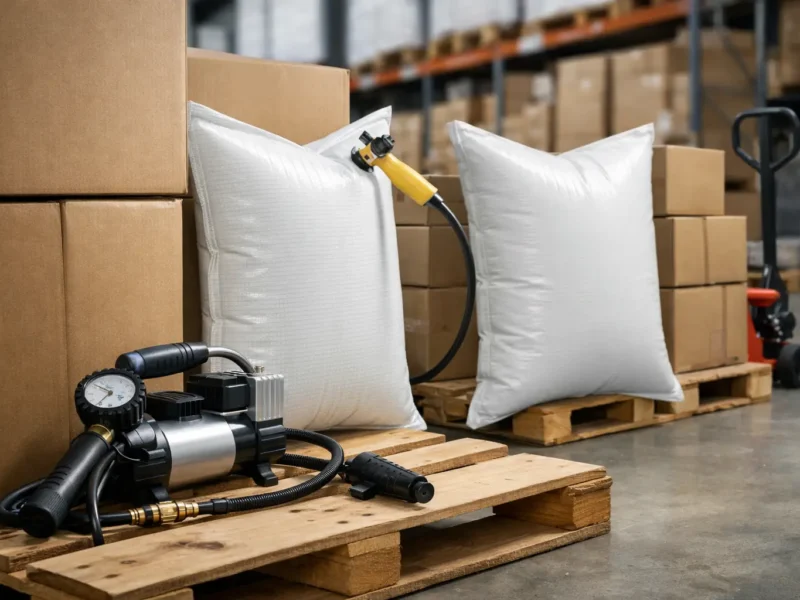
A dunnage bag is only as effective as the way it is filled. A correctly sized bag installed in the right void can still underperform if the inflator is slow, incompatible with the valve, or unable to deliver the required pressure consistently. For warehouse teams moving truckload, railcar, and intermodal freight, choosing the best tools for bag inflation is a practical decision that affects loading time, load stability, and damage risk.
The right setup is not always the most expensive one. It is the one that matches your bag type, available air source, shipment volume, and operating environment. A high-volume distribution center has different requirements than a crew securing occasional machinery shipments in a dry van.
What an Inflator Tool Must Do
Dunnage bags fill the open space between cargo units, helping prevent palletized or unitized loads from shifting during transit. The inflation tool must connect securely to the bag valve, move air efficiently, and allow the operator to stop at the specified working pressure.
Speed matters, but control matters just as much. Overinflation can damage a bag or place excessive force on cargo. Underinflation leaves the bag too soft to provide effective lateral restraint. A dependable tool helps operators reach the bag manufacturer’s recommended pressure without wasting time or fighting a loose connection.
For most freight applications, the inflation system has three working parts: a source of compressed air, an inflator or air gun that controls airflow, and a valve connection designed for the specific dunnage bag. If one part is mismatched, the operation becomes slower and less consistent.
Best Tools for Bag Inflation by Application
Venturi inflators for regular freight loading
A venturi inflator is the standard choice for many shipping operations. It uses compressed air to pull in surrounding air and rapidly fill the dunnage bag. This approach provides high fill volume while using a conventional plant or truck-mounted air supply.
For teams loading multiple trailers, venturi inflators offer a strong balance of speed, portability, and operator control. They are especially useful with PP woven and kraft dunnage bags used to secure palletized consumer goods, industrial components, paper products, and other common freight loads.
The trade-off is that a venturi tool depends on an adequate compressed-air supply. If the air line is undersized, pressure drops across the warehouse, or the compressor cannot keep up with demand, fill time increases. The tool itself may be working properly while the air system becomes the bottleneck.
Compressed-air inflator guns for controlled filling
An air inflator gun paired with the correct valve fitting is often the most direct option when an established compressed-air system is available. These tools give the operator hands-on control at the point of loading and can be a good fit for lower-volume applications or locations where a simple, durable setup is preferred.
The best choice depends on the valve design. A tool that fits one bag style may not seal correctly on another. Before standardizing on an inflator gun, verify that it is designed for your bag valve and that operators can engage and release it without bending, stressing, or contaminating the valve.
A pressure gauge is valuable when the tool or process does not otherwise provide clear pressure control. It gives the crew a repeatable reference point, particularly when different shifts, locations, or bag sizes are involved.
Portable compressor setups for remote loading
Not every loading area has access to plant air. Portable compressors are useful at remote docks, temporary facilities, outside loading areas, or customer sites where freight must be secured before departure. They can also support operations that need redundancy when a central air system is unavailable.
A portable compressor should be selected for more than its maximum PSI rating. Air volume, expressed as CFM, affects how quickly bags fill. Hose length, power availability, duty cycle, noise, and mobility also affect whether the unit works in real loading conditions.
Portable equipment introduces a few operational responsibilities. Crews need to inspect hoses and fittings, manage electrical cords or fuel safely, and protect the equipment from moisture and forklift traffic. For occasional shipments, that effort may be justified. For continuous loading, a fixed air supply and venturi inflator are often more efficient.
Valve-specific adapters and replacement valves
Adapters are not an afterthought. They are what create the seal between the tool and the dunnage bag. A poor connection allows air loss, delays inflation, and encourages operators to hold the fitting in place by hand. That wastes labor and can lead to inconsistent bag pressure.
Keep adapters and replacement valves matched to the dunnage bag inventory used at each facility. If your operation uses more than one bag format, label tools clearly rather than expecting crews to identify compatible components by appearance. A standardized tool-and-valve program reduces loading errors when staffing changes or volume rises.
Choose the Tool Around the Load, Not the Catalog
An inflator should be selected after the bag type and load plan are established. The bag must fit the void, provide the required level of performance, and be appropriate for the transport mode. The tool then needs to inflate that bag safely and efficiently.
Consider these four operating factors before buying or standardizing equipment:
- Shipment volume: A dock filling several bags per day can use a straightforward air gun setup. A high-throughput operation benefits from fast-fill venturi equipment and readily available spare tools.
- Available air supply: Confirm both pressure and air volume where the trailer or railcar is loaded. A compressor that appears sufficient on paper may slow down when other equipment is drawing air.
- Bag and valve format: Woven, kraft, and PE dunnage bags may use different valve systems. Tool compatibility should be confirmed before the bags arrive at the dock.
- Loading environment: Tight trailers, railcar openings, wet yards, remote sites, and congested docks all influence the best hose length, tool profile, and compressor arrangement.
There is no benefit in buying a high-output inflator if the bag valve restricts airflow or the crew only uses a few bags each week. On the other hand, a low-cost manual approach can become expensive when crews are waiting on slow fills at every trailer door.
Inflation Practices That Protect Cargo
Even the right equipment cannot compensate for poor placement. Before inflation, confirm that the dunnage bag fills the intended void and is protected from sharp edges, exposed nails, broken pallets, or irregular load surfaces. Bags should be positioned so they contact stable load faces rather than loose packaging or unstable corners.
Connect the inflator securely, begin filling, and monitor the bag as it expands. The goal is firm contact with both load surfaces at the recommended pressure, not maximum hardness. Stop if the bag begins to pinch, fold sharply, push cargo out of position, or inflate against an unprotected edge.
After inflation, remove the tool according to the valve design and verify that the valve is closed. A quick final check can prevent a long claim process later: look for visible air leaks, confirm the bag remains centered, and make sure cargo has not shifted while the bag was filled.
For railcar and intermodal shipments, where vibration and longer transit cycles can place greater demands on load securement, consistency is especially valuable. Use the same verified bag, valve, and tool combination across shifts whenever possible.
Keep Inflation Equipment Ready for the Dock
Inflator tools work in dusty, busy environments, so basic maintenance is part of cargo protection. Inspect fittings for wear, check hoses for cracks or abrasion, and replace damaged adapters before they cause a loading delay. Store tools where they are protected from impact and where operators can find them without leaving the loading area.
It also helps to keep a spare inflator and compatible adapters on hand. A failed fitting should not force a trailer to sit at the door or send a shipment out with an incomplete securement plan. Plastix USA can help match dunnage bag formats, valves, and inflation equipment to the way your freight actually moves.
The most useful inflator is the one your crew can connect correctly, fill consistently, and rely on when the trailer is waiting at the dock.